Electrician Cost in Austin 2026: Hourly Rates, Panels, and EV Chargers
Expect to pay $95–$165 per hour for a licensed electrician in Austin in 2026, with most residential jobs quoted flat-rate rather than hourly. A standard 200-amp panel upgrade runs $2,800–$4,500. A Level 2 EV charger install lands between $900 and $2,600 depending on wire run and panel headroom. A whole-home rewire on a 1,600 sq ft house sits in the $10,000–$18,000 range. The single biggest driver of electrician cost in Austin isn’t the labor rate — it’s how much Austin Energy permitting, load calculations, and Texas Department of Licensing and Regulation (TDLR) compliance the job triggers.
Here’s what the 2026 numbers actually look like, job by job, plus the licensing red flags that separate a real electrician from a guy with a van.
What Austin electricians charge per hour in 2026
Hourly billing still exists, mostly for diagnostics, small repairs, and time-and-materials service calls. The going rates in the metro right now:
- Journeyman electrician: $95–$125/hour
- Master electrician: $125–$165/hour
- Apprentice (must be supervised): $55–$80/hour, usually rolled into a crew rate
- Emergency / after-hours: 1.5x to 2x the standard rate, with a $150–$250 minimum trip fee
- Service call / diagnostic fee: $85–$150, often credited toward the repair if you book the work
Rates in central Austin (78701, 78703, 78704, 78705) skew about 10–15% higher than in Pflugerville, Round Rock, or Manor. That’s partly parking and drive time, partly the older housing stock — a 1940s bungalow in Clarksville with cloth-insulated wiring is not the same job as a 2018 build in Mueller.
Most reputable Austin shops have shifted to flat-rate pricing for defined tasks. That protects you from a slow tech and protects them from underquoting a mystery job. If a company only quotes hourly for a well-defined job like an EV charger install, that’s a mild yellow flag.
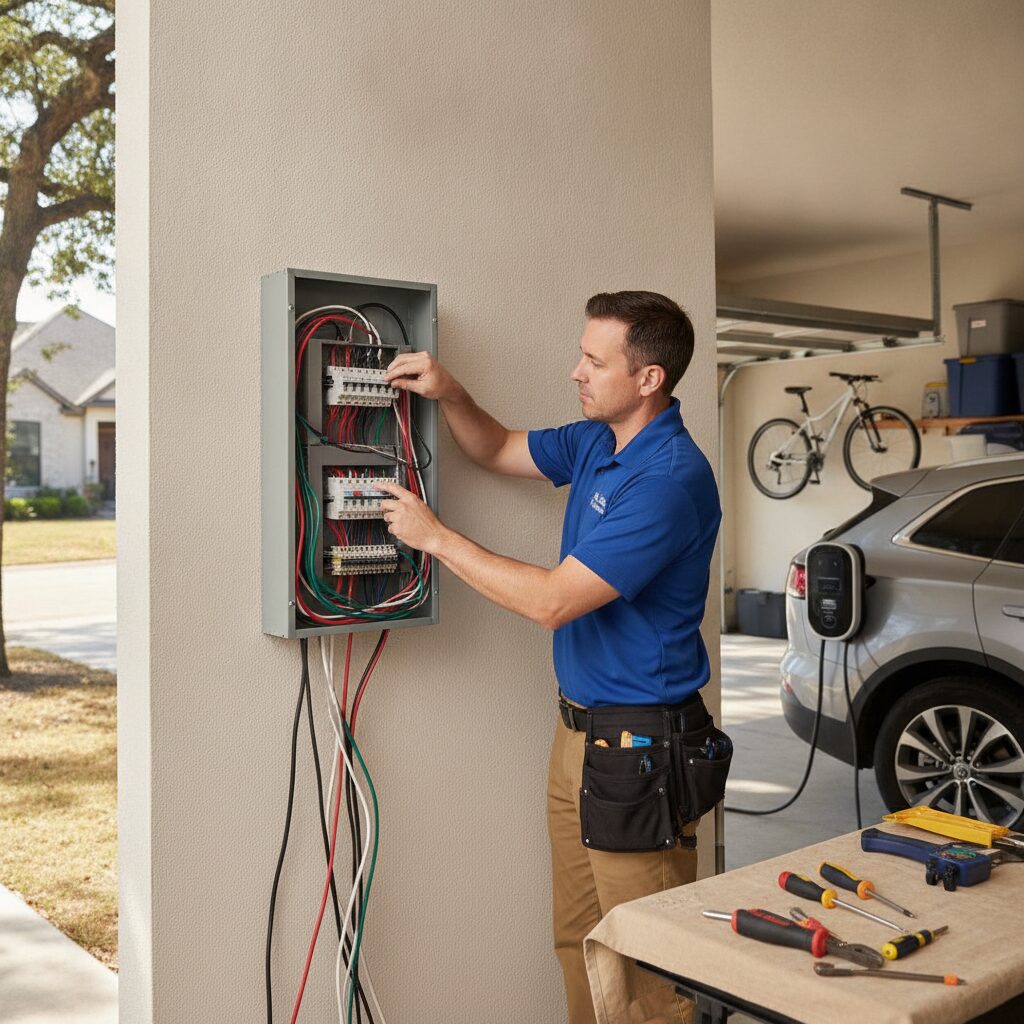
Panel upgrade cost in Austin: 100A to 200A
The 200-amp service upgrade is the most common medium-ticket electrical job in Austin right now, driven by EV chargers, heat pumps, induction ranges, and ADU builds. Real 2026 pricing:
| Job | Typical Austin cost | Time on site |
|---|---|---|
| 100A to 200A panel upgrade, same location | $2,800–$4,500 | 1 day |
| 200A to 400A service (large homes, EV + solar) | $6,500–$11,000 | 2–3 days |
| Panel replacement, same amperage (recall / obsolete brand) | $2,200–$3,600 | 1 day |
| Meter can + mast replacement (storm damage) | $1,400–$2,800 | 0.5–1 day |
| Sub-panel install (garage, ADU, workshop) | $1,600–$3,200 | 0.5–1 day |
What actually moves that number: whether the meter can needs replacing, whether Austin Energy has to schedule a service disconnect (they now typically want 5–10 business days’ notice), and whether your grounding electrode system meets current code. Homes built before 1978 in neighborhoods like Hyde Park, Travis Heights, and Rosedale often need a new ground rod system and bonding at the water main, which adds $200–$500.
If your panel is a Federal Pacific Stab-Lok, Zinsco, or a Challenger, replace it. These aren’t Austin-specific problems, but they’re common in mid-century East Austin and North Loop homes, and no insurer wants them in the underwriting file.
EV charger installation cost in Austin
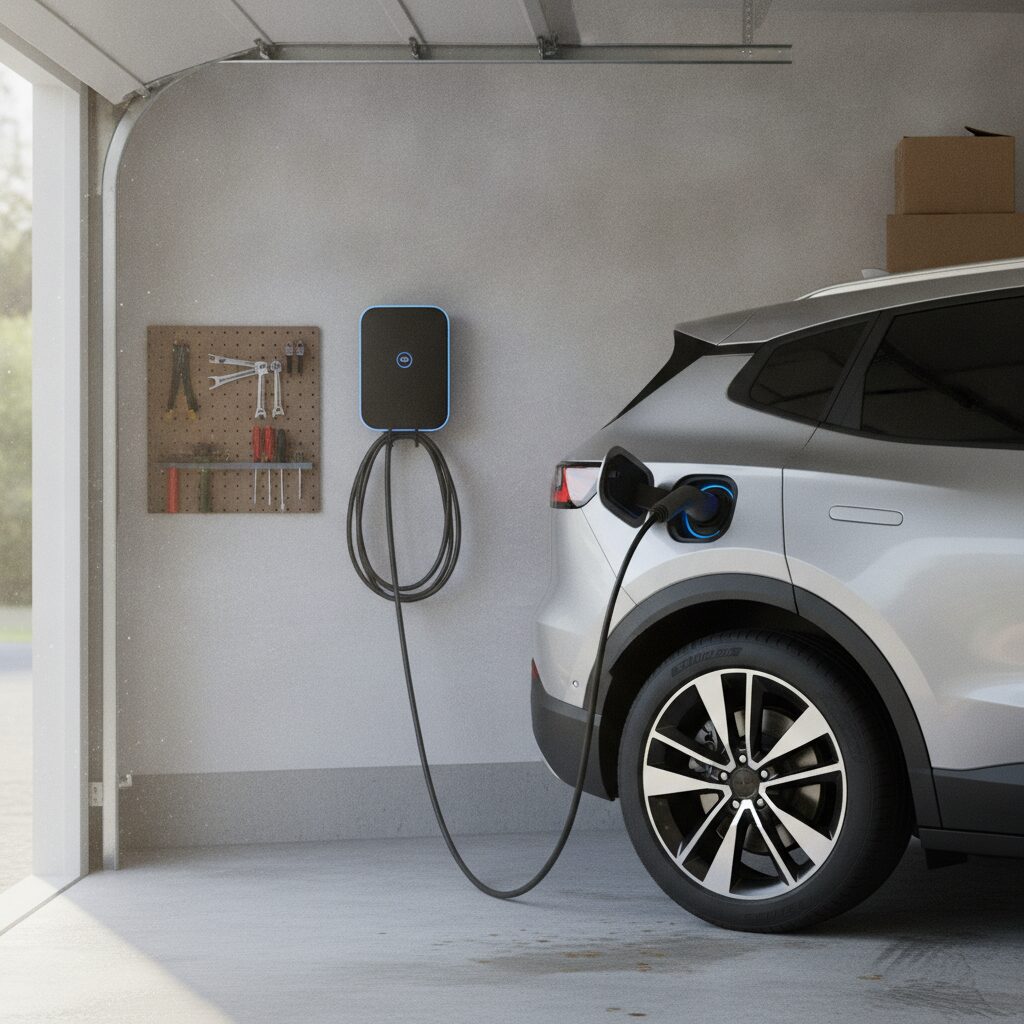
Level 2 EV charger installs are now the single most-booked electrical job in Travis and Williamson counties. The install itself is straightforward — a 240V, 40–60 amp circuit to a NEMA 14-50 outlet or a hardwired unit. The cost is almost entirely about the wire run and whether your panel can absorb the load.
Realistic 2026 pricing tiers
- Easy install ($900–$1,400): Panel in the garage, less than 15 feet of conduit, existing panel has capacity, NEMA 14-50 outlet.
- Standard install ($1,400–$2,000): 25–50 feet of run through drywall or attic, hardwired charger, minor panel work like a load calc and a new 60A breaker.
- Complex install ($2,000–$2,600+): Detached garage, trenching, or a load management device (like a DCC-9 or Wallbox Power Boost) because the panel is full.
- Charger + panel upgrade combo: $3,800–$6,500 all-in. Cheaper than doing them separately six months apart.
Austin Energy still offers a residential EV charger rebate — as of the 2026 program year it’s up to $300 for a qualifying Wi-Fi-connected Level 2 charger, and the installation must be permitted. A shop that quotes you a cash job with “no permit needed” is quietly disqualifying you from the rebate and creating a resale disclosure problem.
For hardware, Tesla Universal Wall Connectors, ChargePoint Home Flex, Wallbox Pulsar Plus, and Emporia EV chargers are the four most-installed units in Austin garages right now. Any decent electrician will install a customer-supplied unit; some will discount labor if you buy through them.
Whole-home rewire cost in Austin
Rewires are the job where quotes vary wildest, because “rewire” means very different things depending on the house. A 1955 pier-and-beam in Zilker with knob-and-tube in the attic is a completely different animal from a 1978 slab home in Northwest Hills with aluminum branch circuits.
| Home size | Partial rewire (branch circuits only) | Full rewire (including panel) |
|---|---|---|
| Under 1,200 sq ft | $6,500–$10,000 | $9,000–$14,000 |
| 1,200–1,800 sq ft | $8,500–$14,000 | $12,000–$18,000 |
| 1,800–2,600 sq ft | $12,000–$19,000 | $16,000–$26,000 |
| 2,600+ sq ft | $18,000+ | $24,000+ |
Two things drive the price up faster than square footage: plaster walls (common in pre-1950 Austin homes) and slab construction with no accessible attic run. Both mean more drywall patching, which either gets subbed out or added as a line item. Budget an extra $2,000–$4,000 for drywall and paint restoration on a full rewire — most electricians don’t include it.
If a contractor quotes a whole-home rewire under $6,000 for anything larger than a small apartment, they’re either doing partial work, skipping permits, or planning to change-order you into oblivion. Walk away.
Other common Austin electrical jobs and prices
The bread-and-butter smaller jobs. These are flat-rate ballparks from Austin-area shops in early 2026:
- Standard outlet or switch replacement: $125–$200 (first one), $45–$75 each additional
- GFCI / AFCI outlet install: $175–$275
- Ceiling fan install (existing box): $200–$350
- Ceiling fan install (new box, no existing fixture): $400–$650
- Recessed can lights (LED, retrofit): $150–$225 per can, cheaper in volume
- Whole-home surge protector (panel-mounted): $350–$600 installed
- Generator interlock kit (for portable generator): $650–$1,100
- Standby generator install (excluding the unit): $3,500–$7,500 for electrical work
- Hot tub 240V circuit: $850–$1,600
- Smoke/CO detector hardwire replacement: $95–$140 per device
Licensing red flags to check before you book
Texas is one of the stricter states for electrical licensing, and Austin permit inspectors are not shy about failing a job. Before you hire anyone, verify these five things. It takes about four minutes total.
1. TDLR license lookup
Every legitimate electrician in Texas holds a license issued by the Texas Department of Licensing and Regulation. Go to the TDLR site and search by name or license number. You want to see either Master Electrician, Journeyman Electrician, or the company’s Electrical Contractor license — active, not expired, no disciplinary actions. If the person quoting you can’t produce a license number on request, that’s the entire conversation.
2. Electrical Contractor license on the company
Individuals hold journeyman or master licenses. Companies need an Electrical Contractor license, which requires a master electrician of record. A journeyman working solo out of a truck without a contractor license behind them cannot legally pull permits in Austin. Ask for both numbers.
3. Insurance certificate — not just “we’re insured”
Ask for a certificate of insurance (COI) emailed directly from their agent. Minimum $500,000 general liability, $1M is better. A shop that hesitates here is uninsured or underinsured, and if they burn your house down you have no recovery path.
4. Permit posture
Panel upgrades, EV chargers, service changes, and rewires all require an Austin Energy or City of Austin permit and a passing inspection. If your electrician suggests skipping the permit “to save you money,” they’re the one saving money — on their own liability. Unpermitted electrical work is a disclosure item when you sell, and Austin’s DSD keeps records that title companies pull.
5. Written scope with model numbers
Real quotes list breaker sizes, wire gauges, conduit type, and specific fixture or charger model numbers. “Install EV charger — $1,800” is not a quote, it’s a hostage note. A proper scope reads like: “Install customer-supplied Tesla Universal Wall Connector, hardwired, 60A breaker, 6 AWG THHN in 3/4″ EMT, ~35 ft run from panel to garage wall, permit and inspection included.”
How to get accurate quotes without wasting a week
Three quotes is still the right number. More than that and you’re just collecting data. A few practical moves:
- Send photos with your request. A clear shot of your panel (door open, labels visible), the meter, and the target install location will get you within 15% of the real price before anyone drives out.
- Ask for the load calculation. For any panel upgrade or EV charger install, a real electrician will run a NEC Article 220 load calc. If they skip it, they’re guessing.
- Get the permit fee itemized. Austin Energy panel upgrade permits run roughly $150–$300. If it’s buried in a lump sum, ask.
- Confirm the disconnect schedule. Austin Energy typically requires the homeowner or contractor to schedule a service disconnect. Ask who’s handling it and what the lead time looks like — that’s often the real bottleneck, not labor.
Booking through a vetted marketplace like HomeShow.ai shortcuts the license verification and insurance-check steps, because the platform runs those checks before a pro can list. If you’d rather DIY the vetting, TDLR’s public license search and the Austin Development Services permit portal are both free and take minutes.
The short version: budget realistically, insist on a permit, and never hire an electrician who won’t hand you a license number. Austin has hundreds of good ones. The bad ones are just louder.