Homeowner Documents to Keep, Scan, or Shred: A Room-by-Room Paperwork Audit
The short version: keep your closing package, deed, title insurance policy, survey, and permits forever. Keep major appliance and system receipts, warranties, and improvement invoices for as long as you own the home plus three to seven years after you sell. Scan and shred utility bills, delivery slips, and expired coupons within 90 days. That’s the core of the homeowner documents to keep list — the rest is deciding what lives in a fireproof box, what lives in your HomeVault, and what goes straight into the shredder tonight.
This audit walks room by room because that’s where paperwork actually accumulates: the kitchen drawer with the fridge manual, the garage folder with the water heater invoice, the office pile from last spring’s roof job. Pull it all out. We’ll sort it together.
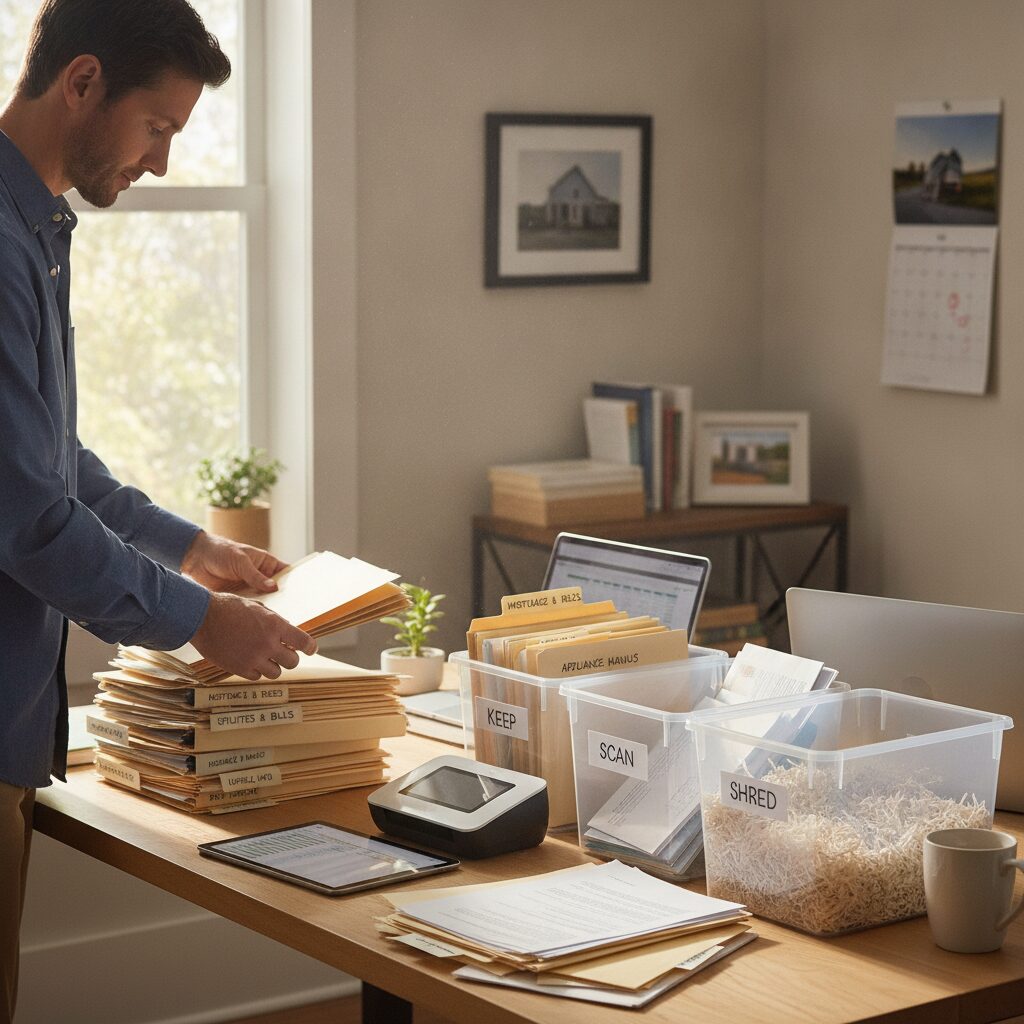
The three-bucket system before you start
Every piece of paper in your house belongs in one of three buckets. Decide the bucket, then move on. Don’t re-read.
- Keep original (physical): Anything with a raised seal, notarization, or wet signature that a title company, court, or insurer might demand in original form. Small pile. Fireproof bag or safe deposit box.
- Scan and retain digitally: The vast majority. Receipts, warranties, permits, inspection reports, insurance policies, service records. Digital copies are legally acceptable for tax purposes (IRS Rev. Proc. 97-22) and for most insurance claims.
- Shred: Anything with your account number, signature, or Social Security number that you no longer need. Anything else with your name and address goes in recycling.
A cross-cut shredder is worth the $60. A digital home like HomeVault is worth the setup hour because insurers, buyers, and the IRS all ask for the same documents at different times, and re-hunting them in a filing cabinet three years from now is how people lose deductions.
Front door and entryway: the closing binder
If you’ve owned your home for more than a year, your closing binder is probably in a drawer near the door or on a bookshelf. It contains 40 to 80 pages of the most important paperwork you own.
Keep the originals of these, indefinitely:
- Deed (warranty deed, grant deed, or the equivalent for your state)
- Title insurance policy — the owner’s policy, not the lender’s
- Survey and plat map
- Closing Disclosure (CD) and settlement statement
- Promissory note and mortgage/deed of trust — until paid off, then keep the satisfaction/release too
- Seller’s Property Disclosure from when you bought
- HOA documents, CC&Rs, and bylaws
Scan every page. The Closing Disclosure alone lists your basis for capital gains calculation when you sell — miss it and you may overpay tax by thousands. Texas homeowners specifically: keep your homestead exemption confirmation from the appraisal district in the same folder.
Shred the marketing flyers, inspection contingency reminders, and any pre-approval letters from lenders you didn’t use.
Kitchen: appliances, warranties, and the manual drawer
Open the drawer. You know the one. Every fridge manual since 2011 lives there.
Here’s the rule: keep the receipt and warranty for anything still under coverage, plus anything you might claim on a homeowners policy after a fire or flood. Toss the paper manual — the PDF is on the manufacturer’s website in 30 seconds, and it’s searchable.
For each major appliance (fridge, range, dishwasher, microwave, washer, dryer, wine fridge), record:
- Purchase date and price
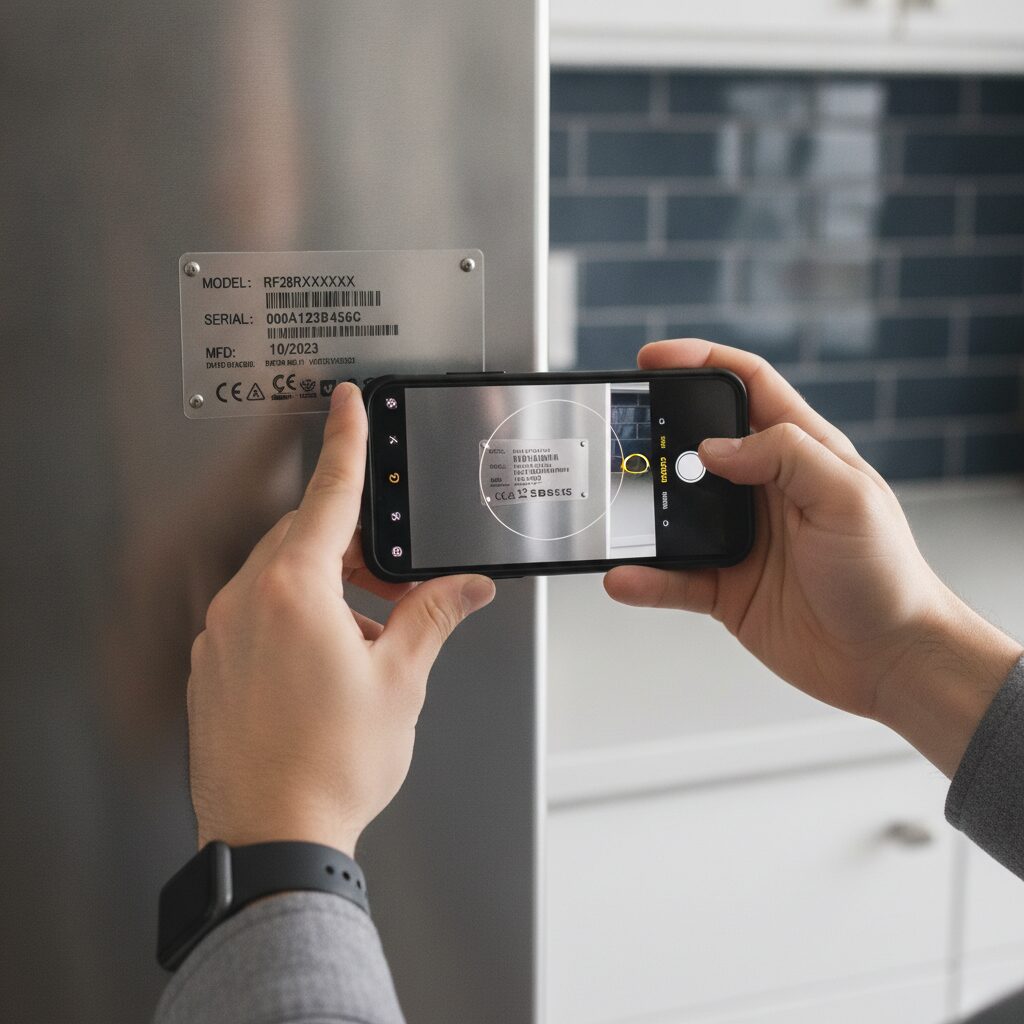
- Model and serial number (photograph the tag)
- Retailer and warranty length
- Extended warranty terms, if any
- Repair invoices (these extend the effective life for insurance purposes)
This is exactly what HomeVault’s appliance tracking is built for. Snap the serial tag, upload the receipt, and set a reminder for the warranty expiration. When your icemaker dies six years from now, you’ll know whether it’s covered without digging.
Living room and bedrooms: furniture, electronics, and the inventory insurers actually want
After a total-loss claim, the average homeowner can recall roughly 30% of what they owned. Adjusters see this every week. What they ask for, in order: proof of ownership, proof of value, proof of loss.
That means for anything worth more than about $300, you want:
- A receipt or credit card statement showing the purchase
- A photograph of the item in your home
- Serial numbers for electronics
- Appraisals for jewelry, art, and collectibles (updated every 3–5 years)
Jewelry, firearms, and collectibles often exceed standard policy sub-limits (typically $1,500 for jewelry, $2,500 for firearms). If you have a $6,000 wedding set and no scheduled endorsement, you’ll recover $1,500 after a burglary. Scan the appraisal, add a rider, and keep the endorsement paperwork with your policy.
A room-by-room video walkthrough on your phone — narrating brands and approximate purchase dates — is worth more than any spreadsheet. Store it in HomeVault, not just your camera roll, because your phone can burn with the house.
Garage and utility room: systems, permits, and improvement receipts
This is where money hides. Every capital improvement you make raises your cost basis and lowers your future capital gains tax when you sell. The IRS lets a married couple exclude $500,000 of gain on a primary residence, but plenty of Austin and Dallas homeowners are already past that ceiling. Improvement receipts are the difference between a tax bill and no tax bill.
Keep, for as long as you own the home plus at least three years after sale (seven if you want to be safe against an audit):
- HVAC install invoices and annual service records
- Water heater, softener, and filtration receipts
- Roof replacement contract, materials warranty, and workmanship warranty
- Window and door replacement invoices (also useful for energy tax credits)
- Foundation repair reports and lifetime transferable warranties — these are gold at resale in Texas
- Solar panel contracts, interconnection agreements, and any PPA or lease documents
- Deck, patio, fence, pool, and landscaping installations over $500
- Every building permit and its final inspection card
Permits deserve their own note
Unpermitted work is a resale killer. If you added a bedroom, converted a garage, or finished a basement, the permit paperwork proves it was inspected. If you can’t find the permit, your municipality’s building department almost certainly has it — request a copy and scan it now, not the week before closing.
Home office: insurance, taxes, and the annual sweep
Your homeowners policy declarations page changes every year. Keep the current one and the immediately prior one. Shred older ones after confirming the new policy has no coverage gaps.
Keep permanently:
- Flood insurance policies and elevation certificates
- Umbrella policy declarations
- Any claim files (claim number, adjuster contact, photos, repair invoices, final settlement letter) — 10 years minimum
Tax documents follow the IRS retention schedule:
| Document | Retention |
|---|---|
| Federal tax returns | 7 years (many pros say keep forever) |
| Property tax bills | 7 years |
| Mortgage interest statements (1098) | 7 years |
| Home improvement receipts | Ownership + 7 years |
| Utility bills | 1 year (shred after) |
| Bank/credit card statements | 1 year, unless tied to a deduction |
Do one annual sweep in January when tax documents arrive anyway. It takes ninety minutes and prevents the January-2028 panic when you’re trying to prove you replaced the roof in 2023.
The basement, attic, and storage bin nobody opens
Most homeowners have a plastic tote somewhere holding paperwork from 1998. Open it once. Sort ruthlessly.
Almost everything in there can be shredded. The exceptions:
- Original marriage, birth, adoption, death, and divorce certificates
- Military discharge papers (DD-214)
- Vehicle titles for anything you still own
- Prior home closing documents if you sold within the last seven years (audit window)
- Estate documents, wills, and trusts (originals — the copies don’t work in probate)
Everything else — old bank statements, expired warranties, appliance manuals for appliances you no longer own, magazines with your address label — is fuel for the shredder.
What insurers actually ask for after a claim
I’ve read enough claim files to tell you the pattern. After a fire, hail claim, or burst pipe, the adjuster’s proof-of-loss packet requests:
- Proof of ownership for each damaged item — receipt, credit card statement, photo in place, or serial number tied to your name
- Age of major systems — roof age determines depreciation on a roof claim; water heater age determines whether they replace or repair
- Prior repair history — was that hail damage already there? Your last roof inspection report answers that
- Permit history for any structural work — unpermitted additions are often excluded
- Mitigation records — did you have the plumbing serviced, the tree trimmed, the alarm monitored?
Homeowners who can produce this within 48 hours settle claims roughly twice as fast as those who can’t. That’s not a marketing statistic — it’s what happens when adjusters aren’t waiting on documentation to close a file.
Digital storage: how to actually do it
A folder of PDFs on your laptop is not a backup. It’s a single point of failure. The setup I recommend:
- Primary: A home-focused platform like HomeVault that organizes documents by property, room, and system, and lets you attach warranties to specific appliances
- Redundant backup: Encrypted cloud storage (iCloud, Google Drive, or a personal NAS) with the same folder structure
- Offsite physical: A fireproof bag at home for originals, plus a safe deposit box or trusted family member’s home for irreplaceable originals (deed, wills, birth certificates)
Name files consistently: YYYY-MM-DD_Vendor_Description.pdf. So a 2024 HVAC install becomes 2024-04-12_TrinityHVAC_Carrier5TonInstall.pdf. Future you will search for “HVAC” and find it in one second.
What to do this weekend
Set a timer for two hours. Not more. Do these in order:
- Pull the closing binder. Scan the deed, title policy, survey, and Closing Disclosure. Put the originals in a fireproof bag.
- Open the manual drawer. Photograph serial tags on every major appliance. Toss the paper manuals.
- Walk each room with your phone camera on video. Narrate as you go. Upload the video.
- Grab the pile of receipts from the last 12 months. Scan anything over $300 or tied to an improvement. Shred anything you don’t need.
- Print the retention table above and tape it inside the file cabinet or above the shredder.
The homeowner documents to keep are the ones that prove ownership, value, condition, and money spent. Everything else is clutter — or worse, an identity theft risk sitting in your recycling bin. Two hours now saves two weeks the next time you sell, refinance, or file a claim.