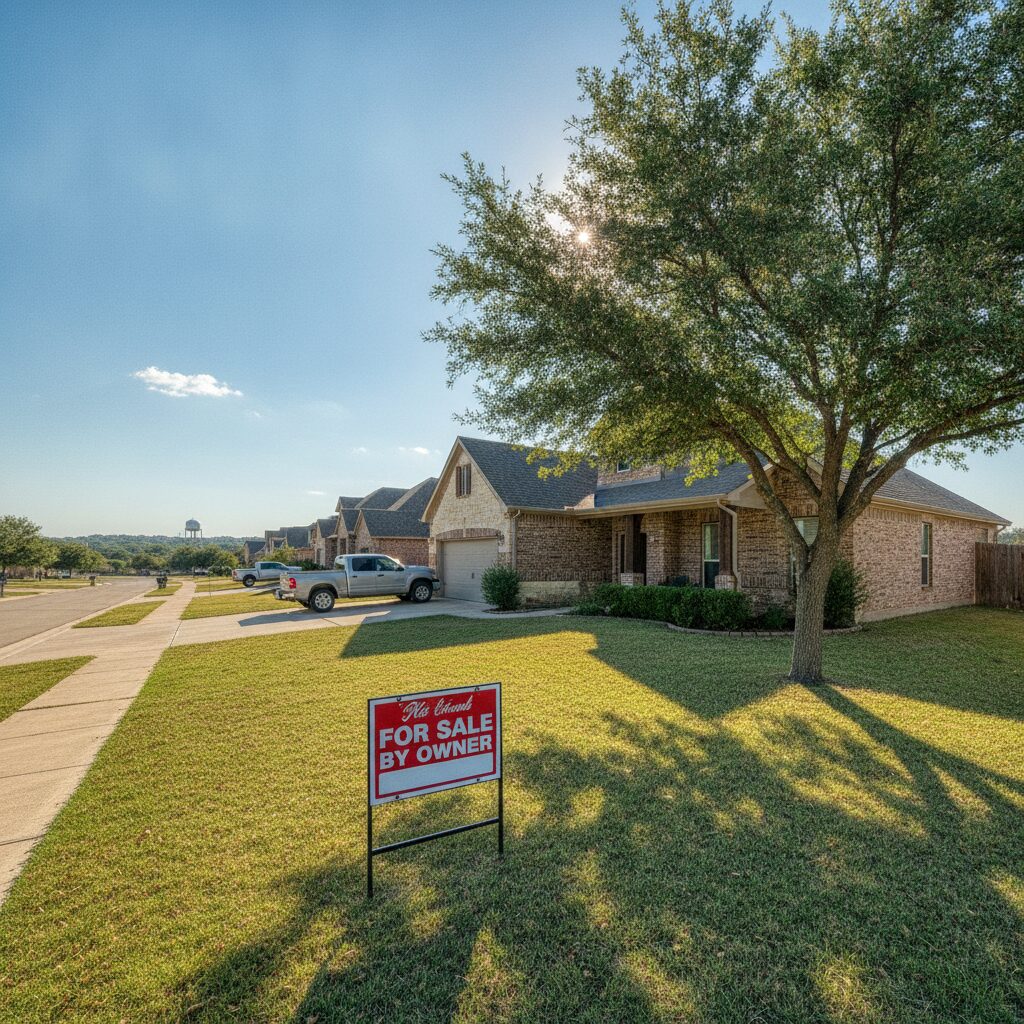
How to Buy a House in Texas Without an Agent: The FSBO Buyer’s Playbook
You can buy a house without an agent in Texas by writing your own offer on the TREC 20-17 One to Four Family Residential Contract, delivering earnest money and the option fee to a title company within three days of execution, and negotiating directly with the listing agent or seller. Post-NAR settlement (effective August 17, 2024), buyer’s agent compensation is no longer baked into MLS listings, which means unrepresented buyers can now ask sellers to credit that 2.5–3% back toward price or closing costs. The mechanics are straightforward. The paperwork is unforgiving. This playbook walks through every step.
Why unrepresented buyers have more leverage after the NAR settlement
Before August 2024, most Texas MLS listings advertised a buyer-agent commission — commonly 2.5% or 3% — that the seller paid at closing. If you showed up without an agent, that money didn’t come back to you. It stayed with the seller or the listing brokerage.
That’s over. Under the settlement, commission offers can no longer appear on the MLS. Compensation is now negotiated separately between buyer and seller (or between the buyer and their own agent, if they have one). For a self-represented buyer, this is the practical difference: on a $450,000 house, a seller who was previously prepared to pay $13,500 to a buyer’s agent can now direct some or all of that toward your closing costs or a price reduction. You have to ask for it in writing, in the contract itself.
The catch: the listing agent still represents the seller. Nothing about that changed. Anything you say to them can and will be used to negotiate against you.

The one document that matters: TREC 20-17
Texas is a promulgated-forms state. The Texas Real Estate Commission publishes the standard residential contract every licensee is required to use, and you can download it for free from trec.texas.gov. The current version is the One to Four Family Residential Contract (Resale), form 20-17.
You do not need a license to fill it out for your own purchase. You do need to read every paragraph. The contract is nine pages of specific mechanics — closing date, financing type, title policy, survey, HOA transfer fees, seller disclosures, and the two windows that give a buyer almost all of their leverage: the option period and the financing contingency.
Fields unrepresented buyers routinely get wrong:
- Paragraph 5 (Earnest Money): typically 1% of sales price, delivered to the title company within three days of the effective date.
- Paragraph 6C (Title Policy): who pays for the owner’s title policy. In Texas the seller almost always pays; don’t accidentally flip it.
- Paragraph 12 (Settlement Expenses): this is where you write in a seller credit toward your closing costs. Cap it at what the lender allows (usually 3–6% for owner-occupied).
- Paragraph 23 (Termination Option): the option fee amount and number of days. More on this below.
Pick your title company before you write the offer
In Texas, the title company is where the transaction actually happens. They hold earnest money, run title searches, coordinate with your lender, issue the title policy, and host closing. Paragraph 6A of the contract asks you to name one.
Do not let the listing agent pick it for you. This is a common move — they’ll suggest “their” title company because the escrow officer there works fast on their deals. That’s not necessarily bad, but the listing agent’s preferred title company will not fight for you if a survey issue or lien pops up. They’ll default to the party they know.
Call two or three independent Texas title companies before you submit an offer. Ask three things:
- What’s your closing fee for a buyer, and do you charge a separate escrow fee?
- Can you close in 30 days from an executed contract with a conventional loan?
- Will you send the title commitment to me directly, not just to the listing agent?
Fee spreads matter. On a typical Austin-area sale, buyer-side title fees run $800–$1,600. The title policy premium itself is set by the Texas Department of Insurance and is identical everywhere, so competition is on the ancillary fees.
The option period is your entire safety net
Paragraph 23 of TREC 20-17 gives the buyer an unrestricted right to terminate for any reason during a negotiated number of days, in exchange for a non-refundable option fee paid directly to the seller. This is the Texas equivalent of a due-diligence period, and it’s the most powerful protection an unrepresented buyer has.
Typical terms right now in the Austin market: 7 to 10 days, $200 to $500 option fee. On a hot listing you might see sellers push for 3 days at $1,000. During this window you can:
- Order a general home inspection ($400–$650 for a 2,000 sq ft home).
- Order specialty inspections — foundation, HVAC, sewer scope, WDI (termite).
- Renegotiate price or repairs based on findings.
- Walk away and get 100% of your earnest money back. You only lose the option fee.
Without an agent, ask for 10 days. You need buffer time to schedule inspectors yourself and read reports carefully. Sellers who push back on 10 days are telling you something about how the rest of the deal will go.
Financing contingency: how it actually protects you
Paragraph 4 lets you elect Third Party Financing, and the attached Third Party Financing Addendum (TREC 40-11) sets the number of days you have to obtain “Buyer Approval.” Under the current form, if you cannot obtain approval and notify the seller in writing before the deadline expires, you can terminate and recover your earnest money.
The mistake unrepresented buyers make: they accept a 15-day financing approval window because “the lender said they can close in 30.” Then the appraisal comes in $12,000 low, underwriting requests three more months of bank statements, and day 21 arrives with no clear-to-close. Now the contingency is dead and the earnest money is at risk.
Ask for 21 days minimum on financing approval. Twenty-five is better. Your lender doesn’t care what’s in the contract as long as they close on time, but you care very much if something goes sideways in underwriting.
Also fill in Paragraph 2B of the addendum carefully: this sets the property appraisal minimum. If you check the box waiving the appraisal contingency to win a bidding war, you are on the hook to bring cash to cover any appraisal gap. That’s a strategic choice, not a default.
Handling listing-agent-only situations
Most Texas listings are represented by a listing agent. When you approach without your own agent, you’ll encounter three scenarios:
1. The listing agent offers to represent you too (intermediary)
Texas allows “intermediary” representation, where one broker represents both parties. In practice, this means neither side gets true advocacy. The listing agent knows the seller’s bottom line and is not going to share it with you. Politely decline. Say: “I’ll be representing myself as an unrepresented buyer. Please continue representing the seller only.”
2. The listing agent tries to route you through a “showing agent”
Some brokerages will pair you with an in-house buyer’s agent so someone collects a commission. You are under no obligation to accept. Written offers submitted directly to the listing agent must be presented to the seller — this is a Texas fiduciary duty. If a listing agent refuses to present your offer, you can file a complaint with TREC.
3. The listing agent cooperates and treats you as a principal
This is the common outcome once they realize you’re serious and prepared. They’ll send you the seller’s disclosure notice, HOA docs, and existing survey, and forward your offer to the seller. In this scenario, be professional but tight-lipped. Never share your maximum price, your timeline pressure, or your reasons for wanting the house.
Negotiating the buyer-agent commission credit
Here is where the post-settlement math changes the game. When the listing was taken, the seller likely signed a listing agreement offering something like 5.5% or 6% total commission, split between listing side and buyer side. If no buyer’s agent is involved, that buyer-side portion is negotiable.
Three ways to structure it in your offer:
- Price reduction: offer $10,000–$15,000 below list, referencing the absence of a buyer-side commission. Cleanest but hits appraisal.
- Seller credit at closing (Paragraph 12A(1)(b)): keep price at list, ask for a seller contribution toward your closing costs and prepaids. Doesn’t affect appraised value.
- Rate buydown: use a portion of the credit to buy down your mortgage rate. On a $400,000 loan, a $10,000 credit toward points can drop your rate roughly 0.375%, saving $90+ per month for the life of the loan.
Whether the seller agrees depends on their listing agreement wording, their motivation, and how many other offers they have. Ask. The worst answer is no.
The 30-day timeline, day by day
| Days | Action |
|---|---|
| 0 | Contract executed. Effective date established. |
| 0–3 | Deliver earnest money and option fee to title company and seller. |
| 1–7 | Order inspections. Review seller’s disclosure and HOA docs. |
| 7–10 | Option period ends. Submit repair amendment (TREC 39-10) or terminate. |
| 10–20 | Appraisal ordered by lender. Title commitment issued. |
| 20–25 | Financing approval deadline. Loan conditions cleared. |
| 28 | Final walkthrough. |
| 29–30 | Closing disclosure reviewed (3-day rule under TRID). Closing at title company. |
When to hire a real estate attorney instead
Texas doesn’t require an attorney at closing — the title company handles document prep. But paying $400–$800 for a Texas real estate attorney to review your executed contract before the option period ends is cheap insurance. Especially on:
- Properties with easements, encroachments, or unusual title exceptions.
- Homes in HOAs with pending litigation or special assessments.
- New construction where the builder uses their own contract instead of TREC forms.
- Off-market or family transactions where no MLS listing exists.
You are not hiring the attorney to negotiate. You are hiring them to spot the one clause that could cost you $30,000 in year three of ownership.
What to do the day you close
Bring a cashier’s check or completed wire (verified by phone with the title company — wire fraud in Texas real estate is up sharply). Bring your driver’s license. Sign roughly 60 pages of documents over about 45 minutes. Walk out with keys.
Then start a home inventory that same week. Photograph every room, save every appliance manual, and record serial numbers on anything worth over $500. Register warranties before they expire. This is exactly what platforms like HomeShow.ai’s HomeVault are built for, and future-you — the one filing an insurance claim after a hailstorm — will be grateful.
Buying without an agent in Texas is not about saving money at any cost. It’s about being the most informed party in the room and using the state’s promulgated forms to protect yourself the same way a licensed agent would. The forms are free. The knowledge is free. The savings are real.