Tree Removal Cost in Austin: 2026 Pricing, Permits & Arborist Red Flags
Tree removal cost in Austin in 2026 runs roughly $450 to $4,800, with most single-tree jobs landing between $900 and $2,200. A 30-foot crepe myrtle in an open yard might cost $475. A 70-foot live oak leaning over a roofline can hit $4,500 before stump grinding. If the trunk measures 19 inches in diameter or more, you also need a City of Austin permit — and at 24 inches you’re dealing with the Heritage Tree ordinance, which can block the removal entirely or require replanting worth thousands. Below is what real ISA-certified arborists in Travis County are actually quoting, plus the red flags to watch for after every hailstorm.
What tree removal actually costs in Austin right now
Price is driven by four things, roughly in this order: height, trunk diameter, proximity to structures, and access for equipment. A tree in the middle of a half-acre lot in Dripping Springs is cheap. The same tree hemmed in by a garage, a pool, and a fence in Hyde Park is a rigging job that can double or triple in price.
Here’s what Austin-area crews are quoting for straightforward removals in early 2026, before stump grinding and haul-off surcharges:
| Tree size | Typical height | 2026 Austin price range | Common examples |
|---|---|---|---|
| Small | Under 30 ft | $450–$850 | Crepe myrtle, young cedar, mountain laurel |
| Medium | 30–50 ft | $850–$1,700 | Ashe juniper, Mexican sycamore, young pecan |
| Large | 50–75 ft | $1,700–$3,200 | Live oak, red oak, mature pecan, cedar elm |
| Very large / hazard | 75+ ft or leaning | $3,200–$4,800+ | Heritage live oak, storm-damaged post oak |
Stump grinding usually adds $95–$350 depending on diameter and how deep you want it ground (4 inches for grass, 12+ inches if you’re replanting). Haul-off of logs and debris runs another $150–$500 for a medium tree. Some crews chip everything on site and leave the mulch free, which is a small but genuine perk if you have beds to fill.
Why species matters more in Austin than most cities
Austin’s tree code treats different species very differently, and that changes both the price and whether you’re legally allowed to cut. Live oak, cedar elm, bald cypress, pecan, Texas ash, Arizona walnut, bigtooth maple, and eastern black walnut all get elevated protection once they reach a certain size. A 20-inch Ashe juniper is fair game with a simple permit. A 20-inch live oak triggers full arborist review.
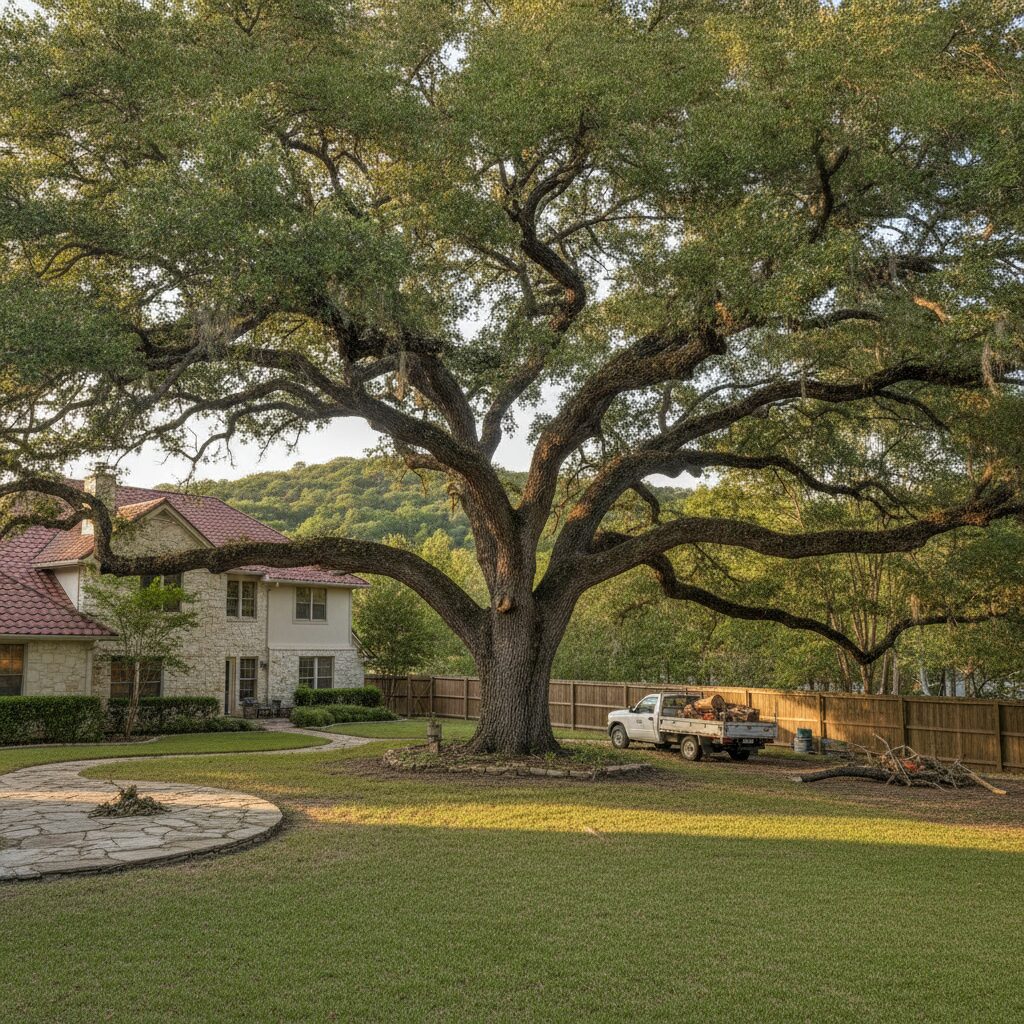
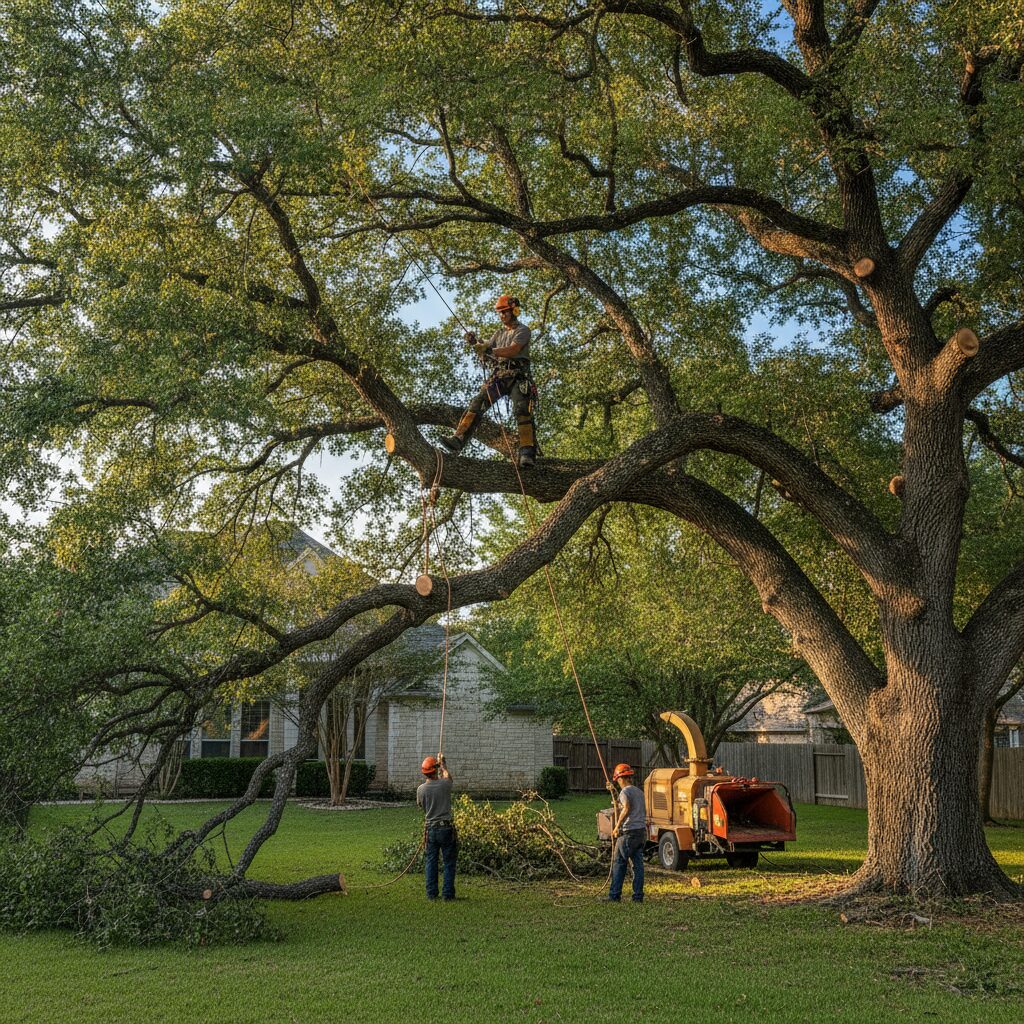
Species also affects the physical job. Live oaks have dense, heavy wood and sprawling lateral limbs that require rigging every piece down — you can’t just fell them. Ashe juniper (what most Austinites still call “cedar”) is lighter but often multi-trunked, which means multiple cuts and more chipping time. Pecan wood is brittle and unpredictable, so crews price in extra risk. Expect a live oak to cost 20–35% more than a cedar of identical height.
Oak wilt adds another wrinkle. From February 1 through June 30, Austin’s forestry team and every reputable arborist will refuse to prune or remove red oaks and live oaks except in emergencies, because fresh cuts attract the sap beetles that spread Bretziella fagacearum. If a crew offers to take down your live oak in April with no discussion of paint-sealing every wound within 15 minutes, that’s a bad sign.
The 19-inch and 24-inch rules: Austin’s permit system explained
Austin’s Land Development Code splits trees into three tiers based on trunk diameter measured at 4.5 feet above the ground (called DBH, or diameter at breast height):
- Under 19 inches DBH: No city permit required for removal on private single-family property. Your HOA might still care.
- 19 to 23.9 inches DBH (“Protected Tree”): Permit required. City arborist reviews the application, and you typically need to show the tree is dead, diseased, an imminent hazard, or preventing reasonable use of the property.
- 24 inches DBH and above (“Heritage Tree”): Only certain species qualify, but if it’s on the heritage list, removal is heavily restricted. Approval usually requires proof of dead, diseased, or imminent hazard status, and replacement plantings can run into the thousands.
The heritage list includes live oak, all other native oaks, bald cypress, cedar elm, pecan, Texas ash, Arizona walnut, eastern black walnut, and bigtooth maple. Ashe juniper, hackberry, and Chinese tallow don’t count no matter how big they get.
Permit fees are modest — typically $100–$300 — but the real cost is the replacement requirement. Remove a 30-inch heritage live oak and the city may require you to plant enough new inches of caliper (essentially, trunk diameter of nursery stock) to offset it. That can mean four to eight new trees at $400–$1,200 installed each, or a fee-in-lieu payment to the city’s tree fund. Budget $2,000–$8,000 on top of the removal itself if a heritage tree is involved.
Emergency and storm removal: why prices spike
After the February 2023 ice storm, Austin homeowners saw quotes triple. That wasn’t gouging in every case — it reflected 80-hour weeks, insurance-mandated crane work, and crews working under lightning-strike leaners. But it also opened the door for out-of-state trucks to roll into neighborhoods knocking on doors, and that’s where most of the horror stories start.
Emergency after-hours removal in Austin usually carries a 40–75% premium over standard pricing. Crane-assisted removals — necessary when a tree is on a house or in a way that can’t be climbed safely — start around $2,500 and go up fast. A crane day rate is $1,800–$3,000 alone, before the arborist crew.
If your insurance is paying, the carrier will often want an itemized bid and photos before work starts. Reputable Austin companies know this workflow and will document everything. Door-knockers rarely do.
Red flags in bids from door-knocking crews
Every big storm brings a wave of trucks with out-of-state plates offering “we’re already in the neighborhood” discounts. Some are legitimate crews expanding capacity. Many are not. Here’s what to look for before you sign anything on a clipboard in your driveway:
- No written estimate on company letterhead. A handwritten number on a business card is not a contract.
- No proof of general liability AND workers’ comp insurance. Ask for a certificate emailed directly from their insurer. If a worker gets hurt on your property and there’s no workers’ comp, your homeowners policy is the backstop.
- No ISA certification or Texas Oak Wilt Certified Arborist on staff. Not every job needs one, but you want to know they exist on the crew.
- Large upfront deposit demands. A 10–25% deposit on scheduled work is normal. “Half now, half when we’re done today” from a stranger is not.
- Cash-only or Zelle-only. Reputable companies take cards and issue invoices.
- Pressure to sign an “assignment of benefits” for your insurance claim. This lets the contractor deal directly with your insurer and can leave you holding disputed charges.
- No mention of Austin’s permit process when the tree is obviously over 19 inches. If they don’t bring it up, they’re either ignorant or planning to skip it — and the fine lands on you, the property owner.
- Vague scope. “Remove the tree” should read: fell, buck, chip brush, haul logs, grind stump to X inches, rake and blow debris.
The City of Austin maintains a list of registered tree service providers, and the ISA has a free “Find an Arborist” tool that verifies certification numbers. Either takes 90 seconds and rules out roughly 80% of the storm-chasers.
How to get a fair bid: what to send arborists
You can usually get within 15% of the final price without a site visit if you send the right photos and measurements. Save yourself three “come out and look” appointments by prepping this once:
- Trunk circumference at 4.5 feet up (divide by 3.14 for DBH). This tells the arborist immediately whether a permit is on the table.
- Approximate height — use a neighbor’s two-story house (roughly 25 feet to the peak) as a reference.
- Species, if you know it. If not, one clear leaf photo will do.
- Photos from three angles showing everything within 15 feet: fences, sheds, power lines, pools, driveways.
- Access notes: gate width, whether a Bobcat can reach the tree, whether the front yard has irrigation heads to protect.
- Whether you want the stump ground, and how deep.
Get three bids. Throw out the highest and the lowest if they’re more than 40% apart from the middle. The winner should be able to walk you through their plan — which limb comes off first, where the crane sets up, what happens to the debris — without hesitating.
When removal isn’t the answer
Sometimes the right call is a hard prune, a cabling system, or a soil-decompaction and deep-root feeding program. A structurally sound live oak in Central Austin can add $15,000–$40,000 to a home’s appraised value, and a competent arborist will tell you when a tree is worth saving. Ask specifically: “Is this tree a removal, or can it be managed for five more years?” If every quote says removal, it’s probably removal. If two say prune and one says remove, get a fourth opinion.
Dead limbs over a roof can often be handled for $300–$700 in a targeted deadwood prune. Cabling a split-crotch pecan runs $400–$900 and buys you a decade. Neither shows up on a door-knocker’s clipboard because neither is as profitable as a full removal.
Booking, tracking, and keeping the paperwork
Every tree job generates paperwork that matters later: the permit, the arborist’s report, the insurance certificate, the invoice, and — if a heritage tree was involved — the replanting agreement. Buyers’ inspectors ask about these when you sell. Insurance adjusters ask about them after the next storm. Losing them is a small, avoidable expense that people incur constantly.
Booking a vetted local arborist through HomeShow.ai keeps the bid, the certificate of insurance, and the completed-work photos attached to your property record automatically, and HomeVault stores the permit PDF alongside your other home documents. If you sell three years from now, the tree work is already documented for the disclosure. That’s not the reason to hire a good arborist — but it’s a reason to stop keeping this stuff in a Gmail folder called “house.”