Pool Service Cost in Austin: What You Should Actually Pay in 2026
Typical pool service cost in Austin in 2026 lands between $140 and $220 per month for weekly full-service on a standard 15,000-gallon residential pool. Chemical-only routes run $95 to $140 monthly. A full drain-and-clean — the once-every-3-to-5-year reset — costs $450 to $900 depending on pool size, stain severity, and how deep the calcium ring goes. Anything meaningfully above those bands usually means either a very large pool, a spa/water feature combo, or a service company padding the invoice. Below is what each tier actually includes, what chemicals really cost at wholesale, and the specific red flags that mean your pool guy is charging you for chlorine you never got.
What weekly full-service actually covers in Austin
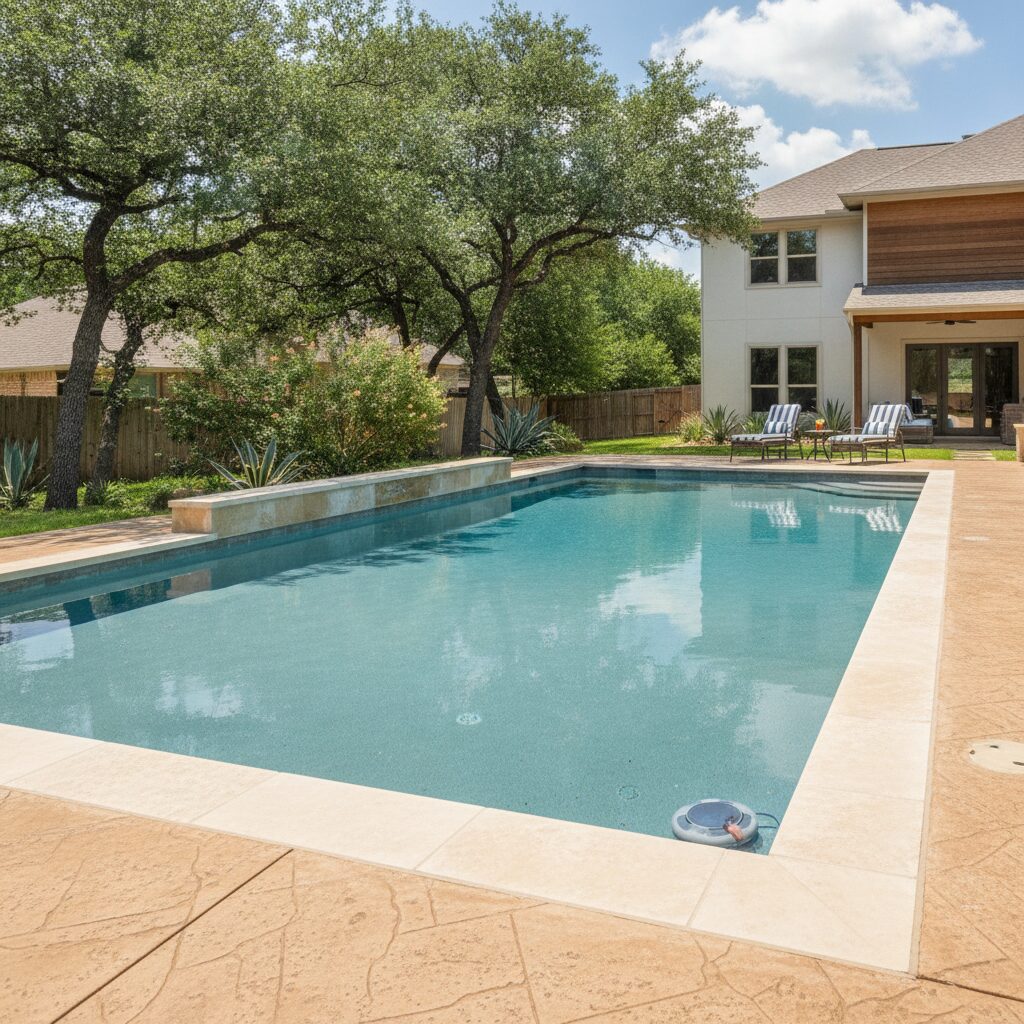
Weekly full-service is the default in Central Texas because our pools take a beating. Summer water temps push past 90°F, cedar and live oak drop constant debris, and hard well or municipal water leaves calcium scale on tile within months. A real full-service visit — 25 to 40 minutes on-site — should include:
- Skim surface and empty skimmer and pump baskets
- Brush walls, steps, and tile line
- Vacuum or verify robot/suction cleaner is working
- Test free chlorine, pH, total alkalinity, cyanuric acid, and calcium hardness
- Add chemicals to bring readings into range
- Backwash DE or sand filter when pressure warrants it (usually monthly, not weekly)
- Inspect pump, motor, and equipment pad for leaks or odd noises
In Austin, expect $140–$180/month for pools under 18,000 gallons with no spa. Add $25–$45/month for an attached spa because it needs its own chemistry check. Pools with waterfalls, in-floor cleaning systems, or saltwater generators typically run $180–$220/month because the tech needs to inspect and clean cell plates and check flow sensors.
One useful benchmark: if your quote is under $120/month for weekly service in Austin, the company is almost certainly cutting a corner — usually chemistry (dumping in trichlor tabs and leaving) or time on site. Under $30 in labor per visit doesn’t pencil out with fuel and insurance.
Chemical-only service: when it makes sense
Chemical-only (sometimes called “chem check”) means the tech comes weekly or bi-weekly, tests water, adds chemicals, and leaves. No brushing, no vacuuming, no basket emptying. You handle the physical labor. Austin pricing sits at $95–$140/month for weekly chem checks on a standard pool.
This tier makes sense if:
- You genuinely enjoy pool maintenance and have 20 minutes twice a week
- You have a solid robotic cleaner (Dolphin, Polaris) doing the vacuuming
- Your pool is heavily shaded or covered when not in use
It’s a bad fit if you travel, if your pool sits under pecan or live oak trees, or if you already lose weekends to yardwork. The $50/month savings vanishes the first time you let free chlorine drop to zero for four days in July and end up buying $180 in shock and algaecide to recover.
Bi-weekly chem checks — the honest tradeoff
Some Austin companies offer bi-weekly chemical service at $60–$80/month. It works for winter months (November–February) when demand collapses and a well-stabilized pool can coast. Do not run bi-weekly service May through September. Cyanuric acid burns off, chlorine demand spikes, and you’ll green up between visits.
Drain-and-clean pricing: the once-every-few-years reset
Austin’s water carries 200–350 ppm calcium hardness out of the tap. Combine that with evaporation-driven concentration and pools accumulate calcium, phosphates, and cyanuric acid until chemistry becomes unmanageable. When cyanuric acid crosses 100 ppm or calcium hardness passes 600 ppm, no amount of chlorine will keep the water clear. Time to drain.
Standard drain-and-clean pricing in Austin, mid-2025:
| Pool size | Basic drain + acid wash | With chlorine bath + tile cleaning |
|---|---|---|
| Under 15,000 gal | $450–$600 | $650–$800 |
| 15,000–25,000 gal | $600–$800 | $800–$1,050 |
| 25,000+ gal or with spa | $800–$1,100 | $1,050–$1,400 |
A basic acid wash strips the top microlayer of plaster to remove stains and calcium. A chlorine bath is milder and better for pools with newer plaster (under 3 years). Tile cleaning with a bead blaster is separate labor — expect $4–$8 per linear foot of tile if calcium buildup is severe.
Two warnings. First, do not drain a pool in Austin between June and September unless it’s an emergency. Plaster can crack from heat expansion, and hydrostatic pressure from summer aquifer levels can pop the shell out of the ground. Schedule for October–April. Second, avoid any company that quotes drain-and-clean without seeing the pool. Stain type matters — organic stains come off with chlorine, metal stains need ascorbic acid, and calcium needs mechanical work.
What pool chemicals actually cost
This is where padding happens. Here’s the wholesale-to-retail reality for the chemicals your service company uses on a 15,000-gallon Austin pool:
| Chemical | Typical monthly use (summer) | Wholesale cost | Fair retail markup |
|---|---|---|---|
| Liquid chlorine (12.5%) | 4–8 gallons | $3.50–$4.50/gal | $6–$9/gal |
| Muriatic acid | 0.5–1 gallon | $6/gal | $10–$14/gal |
| Cyanuric acid (stabilizer) | 0–2 lbs | $3/lb | $5–$7/lb |
| Calcium hypochlorite shock | 1–2 lbs | $3–$4/lb | $6–$9/lb |
| Salt (for SWG pools) | 0–2 bags | $8/bag | $14–$18/bag |
Total actual chemical cost for a typical Austin residential pool, June through September: $45–$75 per month at fair retail. October through April: $20–$40 per month. If your service company itemizes chemicals separately and you’re seeing $120+ in chemical charges in a normal summer month with no algae bloom, ask questions.
How to tell if your pool guy is padding the chlorine bill
Padding happens three ways. Knowing the mechanics is 80% of the defense.
1. Phantom chlorine additions
The tech logs “added 3 gallons liquid chlorine” but your free chlorine reading barely moved between visits. Three gallons of 12.5% liquid chlorine in 15,000 gallons should raise free chlorine by roughly 8 ppm. If your Monday reading was 1.5 ppm and Friday’s is 0.8 ppm after supposedly adding three gallons, something’s off. Either the chemistry log is fiction or your cyanuric acid is so high the chlorine is chemically bound and useless — which is its own problem the tech should be flagging.
2. Trichlor tab overuse
Trichlor tabs are cheap and convenient. They also add cyanuric acid every time they dissolve. A pool dosed exclusively on trichlor will climb from 30 ppm CYA to 100+ ppm within a season, at which point chlorine effectiveness drops 60–70%. The tech then “needs” to add more chlorine to compensate — chlorine you’re paying for. Any Austin pool over 70 ppm CYA in July is being mismanaged. Ask for your CYA reading in writing.
3. “Shock treatments” that shouldn’t be needed
A properly maintained pool needs shock roughly once a month in summer, less in winter. If your invoice shows shock every single visit, either your pool has a real problem (bather load, phosphates, sun exposure) or the tech is billing for shock they never added. Ask for the specific product name and quantity. “Shock” isn’t a chemical — it’s a category.
The five-minute audit
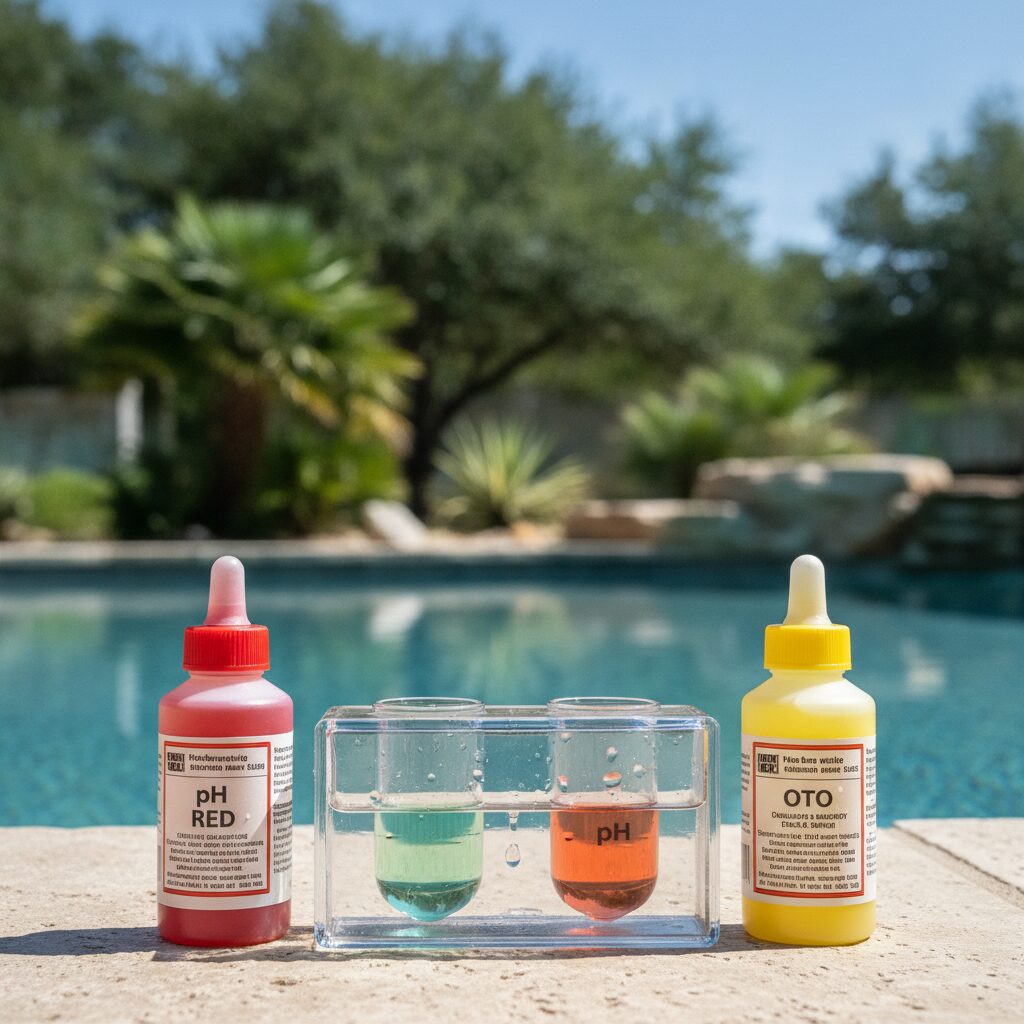
Buy a Taylor K-2006 test kit ($75, lasts years) and test your own water the morning after a service visit. Compare your numbers to what the tech logged. If the reported chemistry consistently doesn’t match your independent test, switch companies. This one habit saves Austin pool owners an average of $30–$60 per month based on informal comparison shopping we’ve seen on HomeShow.ai service reviews.
Bundled pricing vs. chemicals-billed-separately
Austin service companies use two billing models. Understand which you’re on.
All-inclusive flat rate: One monthly price covers labor and chemicals. Simple, predictable, and the tech has no incentive to over-dose. Downside: they have an incentive to under-dose. This model works well if you can spot-check chemistry yourself.
Labor + chemicals billed at cost (or cost-plus): You pay a labor fee ($80–$110/month) and get itemized chemical charges. Transparent when the company is honest, easy to abuse when they aren’t. Ask for photos of empty jugs left poolside or line-item receipts.
Neither model is inherently better. What matters is trust and verification. A tech who texts you a photo of the test strip or the digital meter reading after every visit is worth $20 more per month than one who doesn’t.
Seasonal price shifts you should expect
Austin pool service isn’t priced evenly across the year, but many companies charge a flat annual rate that averages summer and winter. If yours doesn’t, expect these swings:
- March–May: Pool openings, algae recovery, filter cleanings. Higher one-time charges likely.
- June–September: Peak chemical demand. Chemical bills 2–3x winter levels. Filter backwashes more frequent.
- October–November: Leaf drop from live oaks and pecans creates skimmer workload but chemical usage drops.
- December–February: Minimal chemical use. Good time to negotiate annual contracts or schedule drain-and-clean.
Booking a pool pro without getting burned
Three questions to ask before signing with any Austin pool service:
- “Do you leave a written or digital chemistry log after every visit?” If no, walk.
- “How do you handle cyanuric acid buildup — trichlor or liquid chlorine primary?” Correct answer involves liquid chlorine as the primary sanitizer, with trichlor used sparingly or seasonally.
- “What’s your policy if I test the water and readings don’t match your log?” A confident tech welcomes verification.
Get two or three quotes. Ask for references from customers with pools your size. And if you’re comparing service pros across categories — pool, lawn, HVAC — a booking platform with verified reviews and transparent pricing makes the shortlist a lot faster than cold-calling names off a lawn sign.