Home System Lifespan in Texas: A 10-Year Failure Timeline
In a typical Texas home, the first major system to fail is usually the HVAC condenser or the water heater — often between years 8 and 12, not the 15–20 that manufacturers advertise. Home system lifespan in Texas runs roughly 20–30% shorter than the national averages you’ll see quoted in Consumer Reports, because our climate stacks three unusual stressors on top of normal wear: sustained 100°F+ heat, hail events, and hard water with 150–300 ppm of dissolved minerals in most metro areas. If you bought or built in 2015, you are living inside the failure window right now. Below is what tends to break, when, and what to have documented before the technician shows up.
Why Texas eats appliances and systems faster
Three regional factors do the damage. Understanding them makes the timeline below make sense.
Heat load. Austin averages 116 days a year above 90°F; Houston is close behind. An AC condenser sized for a 20°F outdoor-to-indoor delta is running against a 40°F delta for months at a time. That’s not “hard use” — that’s operating at redline.
Hail. Texas leads the U.S. in hail claims. The Insurance Council of Texas logged over 500,000 hail claims in 2023 alone. Roofs, gutters, condenser fins, and skylights take repeated hits, and each event compounds the last.
Hard water. Municipal water in San Antonio, Austin, Dallas, and Fort Worth typically tests between 150 and 300 ppm total hardness. That mineral load calcifies inside water heaters, dishwashers, ice makers, and washing machine solenoids. It doesn’t cause dramatic failures. It causes early ones.
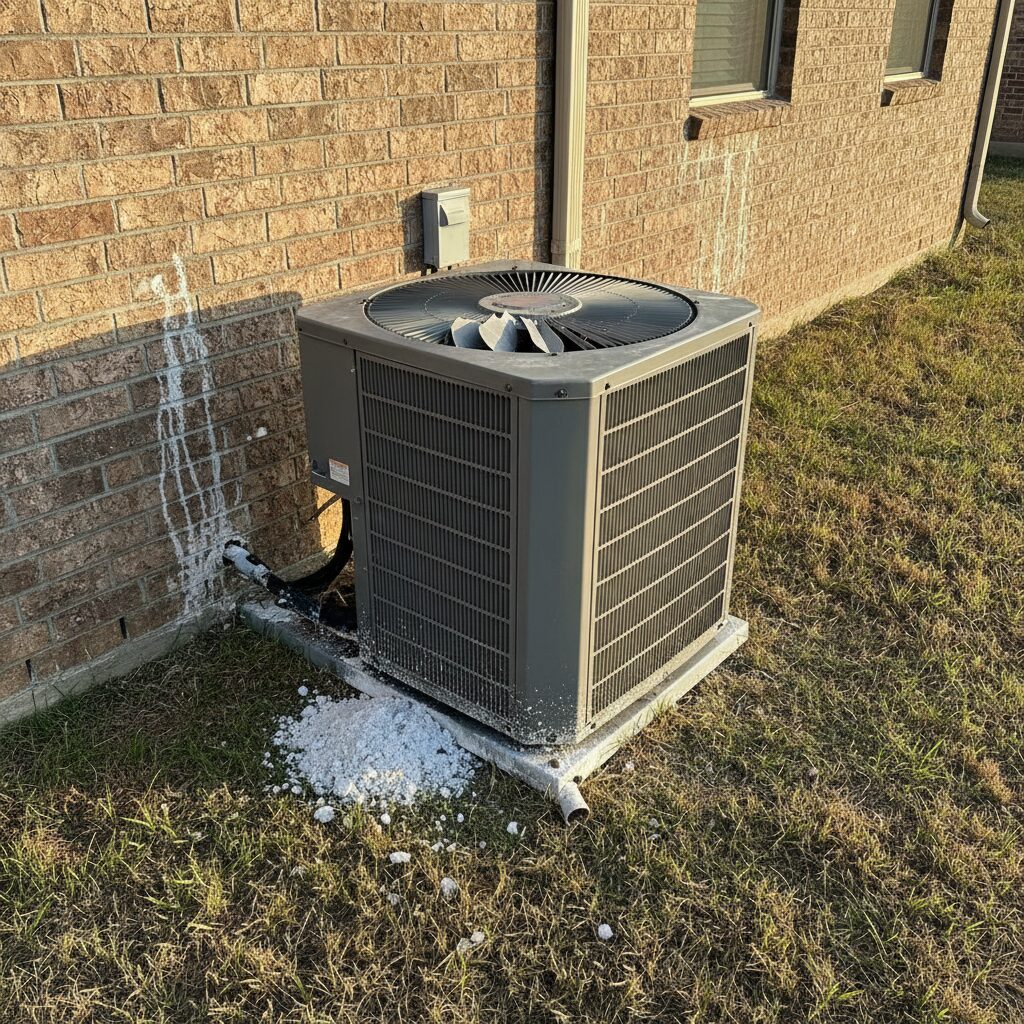
The 10-year failure timeline
Here’s what to expect if your home is a standard post-2010 build in a major Texas metro, with no water softener and average maintenance.
| System | National average | Texas realistic | First symptom |
|---|---|---|---|
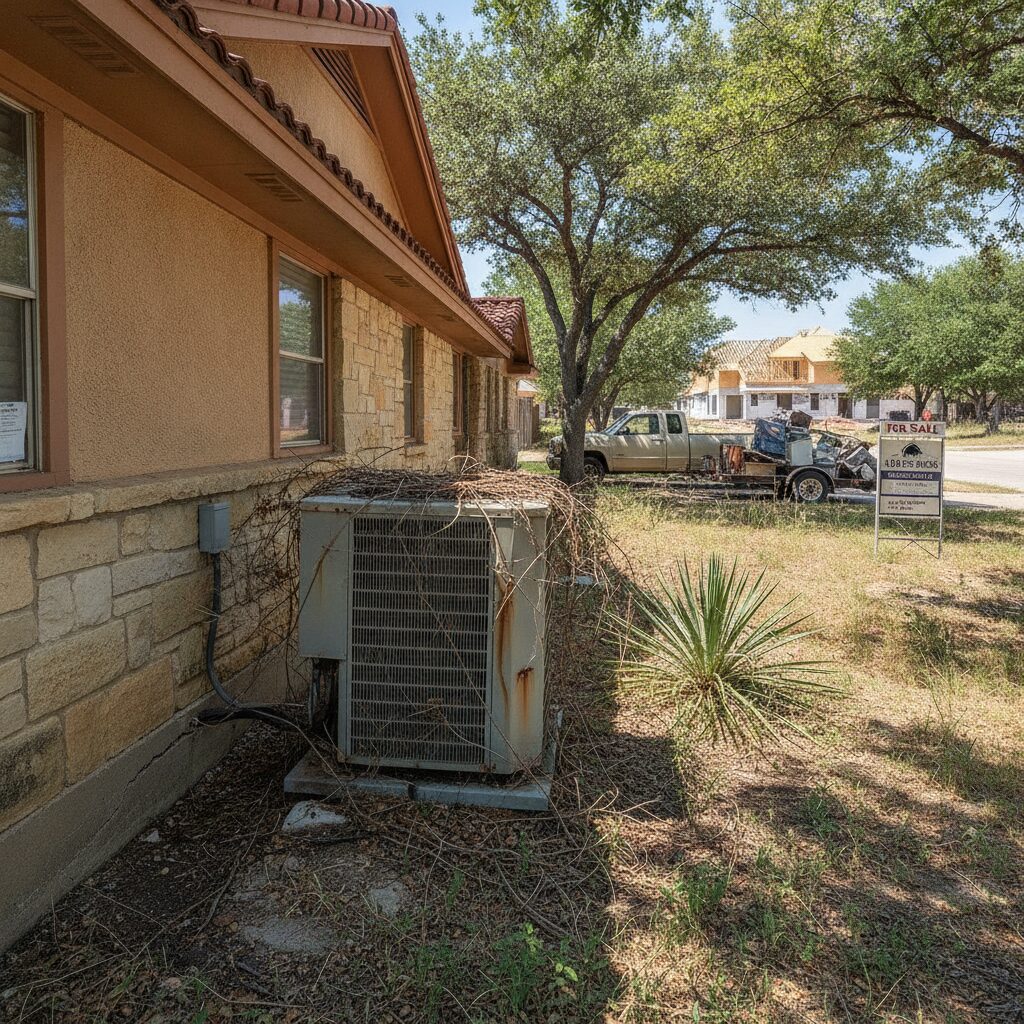
| HVAC condenser | 15–20 yrs | 10–13 yrs | Longer run times, weak cold air in August |
| Furnace / air handler | 18–25 yrs | 15–18 yrs | Fan motor noise, thermostat lag |
| Tank water heater | 10–12 yrs | 7–9 yrs | Popping sounds, rusty hot water |
| Tankless water heater | 15–20 yrs | 10–14 yrs | Error codes, drop in flow rate |
| Asphalt shingle roof | 20–25 yrs | 12–17 yrs | Granule loss, hail bruising |
| Dishwasher | 10 yrs | 6–8 yrs | Cloudy glasses, drain pump failure |
| Refrigerator | 13 yrs | 10–12 yrs | Ice maker fails first, always |
| Washing machine | 10–13 yrs | 8–10 yrs | Solenoid clogs, unbalanced spin |
| Garage door opener | 15 yrs | 10–12 yrs | Logic board failure in attic heat |
| Fence (cedar) | 15–20 yrs | 8–12 yrs | Post rot at grade, wind damage |
Years 1–3: Nothing should break, but things will
New construction defects surface early. In a Texas build, watch for foundation cracks (our expansive clay soils move 3–4 inches seasonally), grout separation around tubs, and improperly sized HVAC returns. Builders often install the minimum SEER unit allowed, which struggles the first full summer.
Ice makers are the leading appliance failure in year one or two. Hard water clogs the inlet valve. Cost to replace the valve: $180–$250. Cost to replace the fridge because you didn’t catch it and it leaked into the subfloor: $8,000+.
Photograph and log every model number and serial number in month one. If a warranty claim comes up in year three, you don’t want to be pulling a fridge away from the wall in July to read the sticker.
Years 4–6: The dishwasher goes first
Dishwashers are the canary. National average lifespan is 10 years; in Austin and Dallas, expect 6 to 8. The drain pump and heating element are the two failure points, and both are accelerated by scale buildup. Bosch and Miele hold up better than Frigidaire or GE at this stage, but nothing is immune.
Also in this window: garbage disposals (2–4 years for a 1/3 HP builder-grade unit), microwave magnetrons, and the first round of HVAC capacitor failures. A capacitor is a $15 part and a $250 service call. Two capacitor replacements in a summer is a signal, not a coincidence — the compressor is drawing too much current, which means it’s tired.
Years 7–9: The water heater is on borrowed time
If you have a standard 40- or 50-gallon tank water heater and no softener, you are past the median failure point by year 8. The sediment layer at the bottom of the tank insulates the heating element, which then works harder, which then fails. You’ll hear popping or rumbling for weeks or months before it goes.
The failure mode matters. A slow leak from the tank seam is inconvenient. A burst tank on the second floor is a $15,000 event that your homeowners insurance may or may not cover depending on how “sudden” it was. Age of the unit is a factor insurers actively use to deny claims.
This is also when the first hail-damaged roof starts leaking. A roof that took a 1.5″ hail hit in year 4 often doesn’t leak until year 8, after enough thermal cycling has widened the fractures around each impact.
Year 10: The HVAC decision
Year 10 is the fork in the road for HVAC. Your condenser is still working, but:
- R-410A refrigerant is being phased out in favor of R-454B. Servicing an older system gets more expensive every year.
- A 14 SEER unit from 2015 uses roughly 30% more electricity than a modern 18 SEER equivalent. In a Texas summer, that’s $600–$900 a year.
- Compressor failure out of warranty is a $3,500–$5,500 repair. A full system replacement is $8,000–$14,000.
The math usually favors replacement at year 10–12 if any major component fails, and repair if only capacitors, contactors, or fan motors are the problem. Get the model and install date documented so any tech can quote you honestly instead of guessing.
Years 11–15: Everything else
By year 12, the refrigerator’s compressor or sealed system fails. Washing machines start throwing unbalance errors as the suspension rods wear. Garage door opener logic boards cook in 140°F attic heat. Cedar fence posts, sitting in wet clay half the year and baked the other half, snap at grade during the first serious wind event.
Roofs are the biggest ticket in this window. A composition shingle roof installed in 2013 in the DFW hail belt is probably on its second insurance claim by 2025. Insurers are increasingly refusing to renew policies on roofs older than 15 years, which forces the replacement decision whether you’re ready or not.
What to track, and why it saves you money
The single biggest reason Texas homeowners overpay on repairs and replacements is missing documentation. When a tech asks how old the unit is and you don’t know, you’re negotiating from behind. When you file a warranty claim without a serial number and purchase date, you’re often denied on the first pass.
A minimum viable home inventory for a Texas home includes:
- Model and serial numbers for HVAC (indoor and outdoor units), water heater, all major appliances, and garage door opener.
- Install date and installer — critical for manufacturer warranties, most of which run 5–10 years on parts.
- Maintenance history — HVAC tune-ups, water heater flushes, roof inspections after every hail event.
- Photos of receipts and permits for any replaced system. Buyers of your home will ask, and appraisers care.
- Warranty expiration dates for each item, with a reminder 60 days before.
This is what tools like HomeVault inside HomeShow.ai are built for. Log a unit once, snap the sticker, and the record survives moves, contractors, and the inevitable moment at 11 p.m. in August when the AC dies and you’re trying to remember whether the compressor is still under the 10-year Trane warranty. Pair it with a home warranty policy that covers systems past their manufacturer coverage, and the failure timeline above becomes a budget instead of a series of surprises.
Warranties: what actually pays out in Texas
Two categories matter, and people confuse them constantly.
Manufacturer warranties cover defects. They’re tied to the original install date and often require professional installation and annual maintenance records to remain valid. Skip a documented HVAC tune-up and Carrier can (and will) deny a compressor claim.
Home warranty plans (American Home Shield, First American, Choice, etc.) cover breakdowns from normal wear regardless of age, with a service fee of $75–$125 per call. In Texas, where systems fail early, these plans pay out more often than the national average. The catch: they cap payouts, exclude “code upgrades,” and won’t cover damage from lack of maintenance. Documentation is again the deciding factor.
A rule of thumb: if any major system is past 70% of its Texas-realistic lifespan from the table above, a home warranty is probably worth the $500–$700 annual premium. Below that, self-insure.
The bottom line for Texas homeowners
Assume everything in your house is going to fail 20–30% sooner than the box promised. Budget for one major system replacement every 3–4 years once the house passes year 7. Track model numbers and install dates the day you close, not the day something breaks. And treat hail, heat, and hard water as line items in your ownership cost, because they are.
The homeowners who get burned in Texas aren’t the ones whose water heater fails at year 8. They’re the ones who didn’t know it was 8 years old, didn’t have the warranty paperwork, and paid full replacement cost on a Saturday.