Roof Replacement Cost in Austin: Shingle, Metal, and Tile Compared
A full roof replacement cost in Austin in late 2024 runs roughly $8,500 to $14,500 for a standard 22-square asphalt shingle roof, $22,000 to $45,000 for standing-seam metal, and $30,000 to $70,000+ for concrete or clay tile. Per square (100 sq. ft.), expect $385–$650 for architectural shingles, $1,000–$2,000 for metal, and $1,400–$3,200 for tile — installed, with tear-off, underlayment, and basic decking repairs included. Those ranges are what local contractors in Travis, Williamson, and Hays counties are actually quoting, not national averages. Hail claims, steep pitches, and two-story access all shift the number meaningfully.
Below is what drives the price, how hailstorm season changes the conversation with your insurer, and when patching a section beats tearing the whole thing off.
Per-square pricing for Austin roofs in 2024
Roofers price by the “square” — a 10-by-10-foot section, or 100 square feet of roof surface. A typical Austin single-story home with a 4:12 to 6:12 pitch runs 20 to 28 squares. A two-story in Circle C, Steiner Ranch, or Mueller often pushes 32 to 40 squares once you account for dormers and steeper pitches.
Here’s what the three main materials actually cost right now, based on quotes I’ve reviewed from contractors working ZIP codes 78704, 78745, 78759, and out to Cedar Park and Buda:
| Material | Installed cost per square | Typical 25-square home | Expected lifespan |
|---|---|---|---|
| 3-tab asphalt shingle | $325–$425 | $8,100–$10,600 | 15–20 yrs |
| Architectural (dimensional) shingle | $385–$650 | $9,600–$16,250 | 25–30 yrs |
| Class 4 impact-resistant shingle | $525–$800 | $13,100–$20,000 | 30+ yrs |
| Standing-seam metal (24-ga steel) | $1,000–$1,750 | $25,000–$43,750 | 40–60 yrs |
| Aluminum metal shingle | $900–$1,400 | $22,500–$35,000 | 40–50 yrs |
| Concrete tile | $1,400–$2,200 | $35,000–$55,000 | 50+ yrs |
| Clay tile | $1,800–$3,200 | $45,000–$80,000 | 75+ yrs |
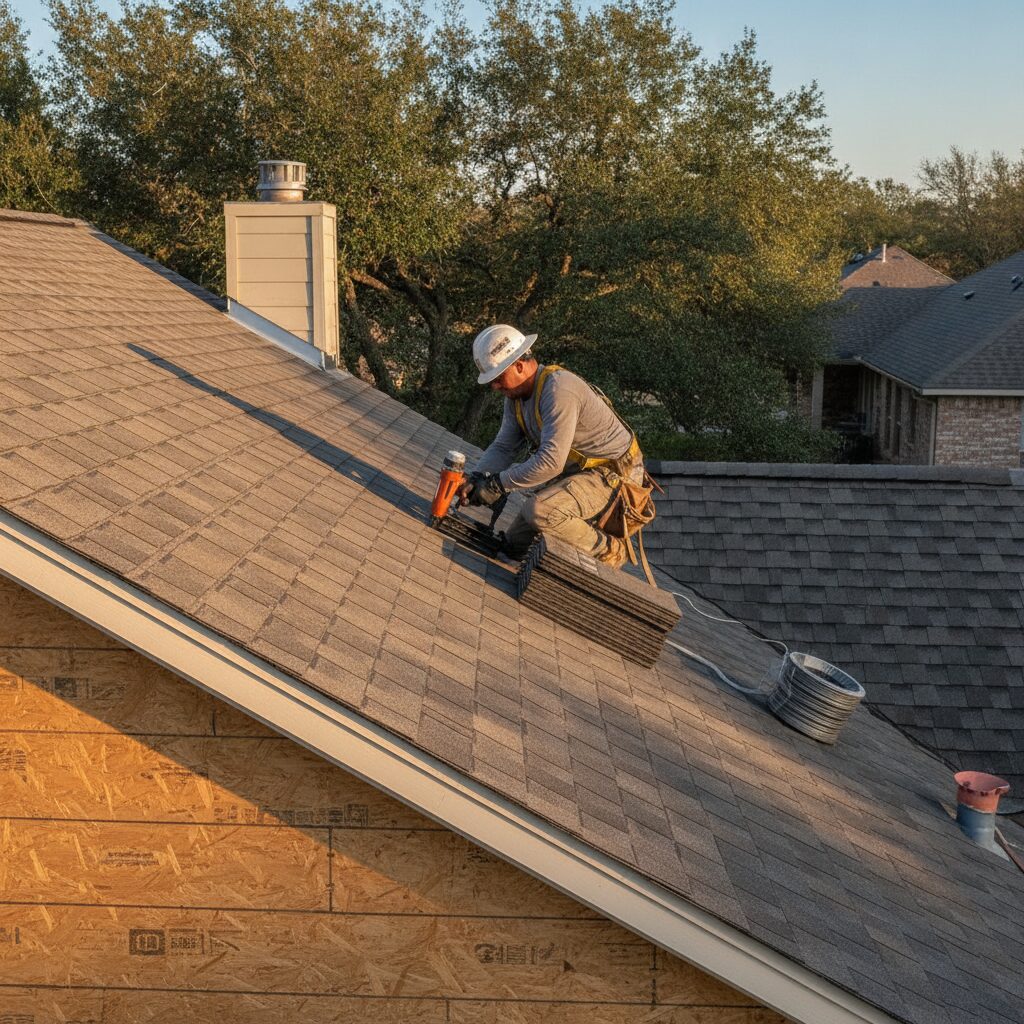
Those numbers assume full tear-off of one existing layer, synthetic underlayment, new drip edge, new pipe boots, ridge vent, and replacement of up to roughly 10% of decking. Add $2–$4 per square foot of decking if your OSB is soft. Add $500–$1,200 if a chimney needs new step flashing and counterflashing. Skylights are $400–$900 each to reset, more if they’re old and you replace them.
Why Austin pricing differs from the national average
HomeAdvisor and Angi often quote $5,000–$11,000 for a “typical” replacement. Those numbers are stale and weighted toward smaller, simpler homes in lower-cost markets. Three things push Austin higher:
- Labor demand. Crews here have been booked solid through every spring hail cycle since 2021. When demand spikes after a storm, per-square labor jumps 15–25% within weeks.
- Steep pitches and tall plates. A lot of Hill Country builds — Lakeway, Bee Cave, West Lake Hills — run 8:12 or steeper with 10-foot plate heights. That triggers steep/high charges of $50–$150 per square.
- Code upgrades. The 2021 IRC adoption in the City of Austin requires synthetic underlayment, proper ice-and-water at penetrations, and in some jurisdictions, six-nail fastening patterns. Older houses originally built with felt and four-nail patterns get hit with the upgrade cost.
If a quote comes in under $7,500 for a 25-square architectural shingle replacement in Austin, look hard at what’s missing. It’s usually decking, flashing, or the disposal fee.
Shingle, metal, or tile: which makes sense for your house?
Asphalt shingle
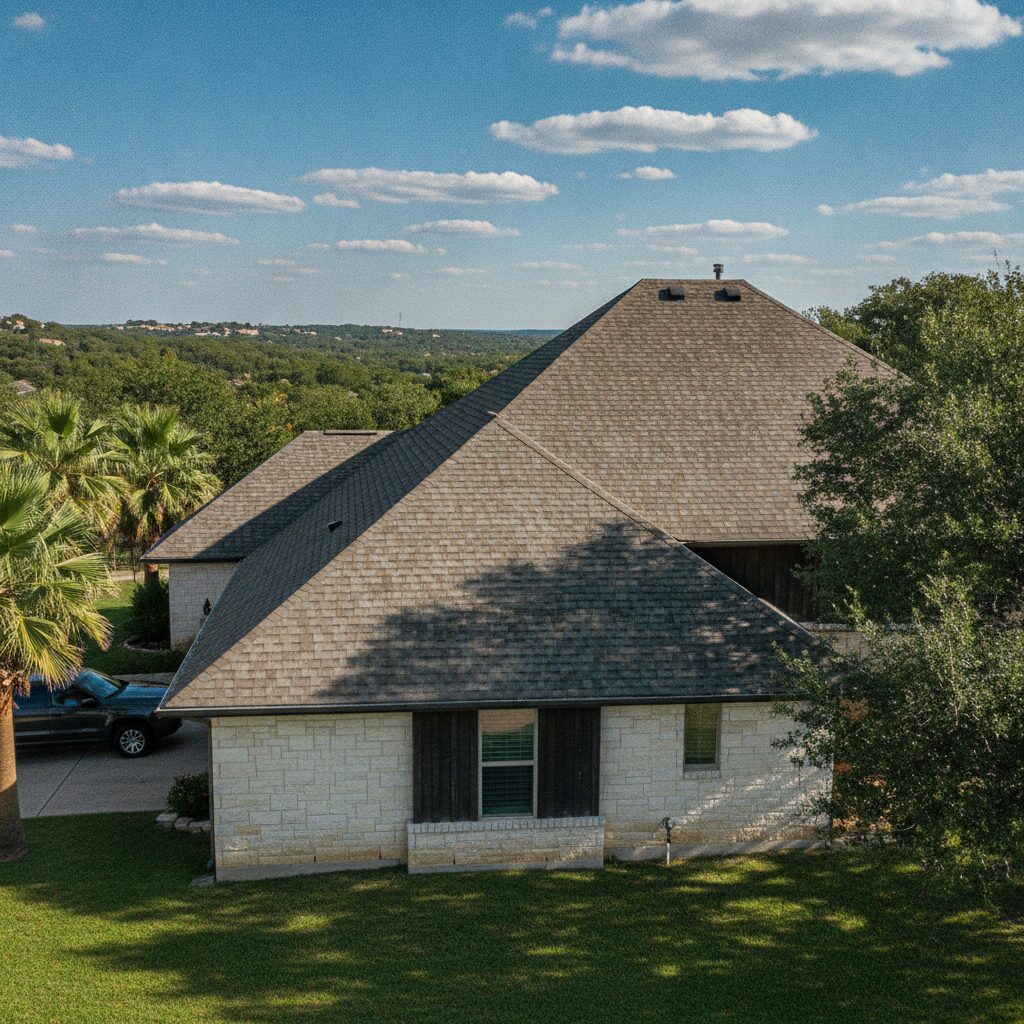
Roughly 85% of Austin homes wear asphalt shingles, and for most owners it’s still the right call. Architectural shingles from GAF Timberline HDZ, Owens Corning Duration, or CertainTeed Landmark run $400–$525 per square installed by a reputable mid-tier contractor. They handle Texas heat reasonably well and — critically — they’re what every insurance policy is written around. Claims process fastest on shingle roofs because adjusters see them every day.
The upgrade worth considering: Class 4 impact-resistant shingles. Brands like GAF Armorshield IV or Malarkey Vista AR cost about $100–$175 more per square but qualify for a hail discount on most Texas homeowner policies, typically 10–28% off the wind/hail portion of your premium. On a $4,500/year policy, that’s $300–$900 back annually. They pay for themselves in 4–7 years if you stay in the house.
Metal
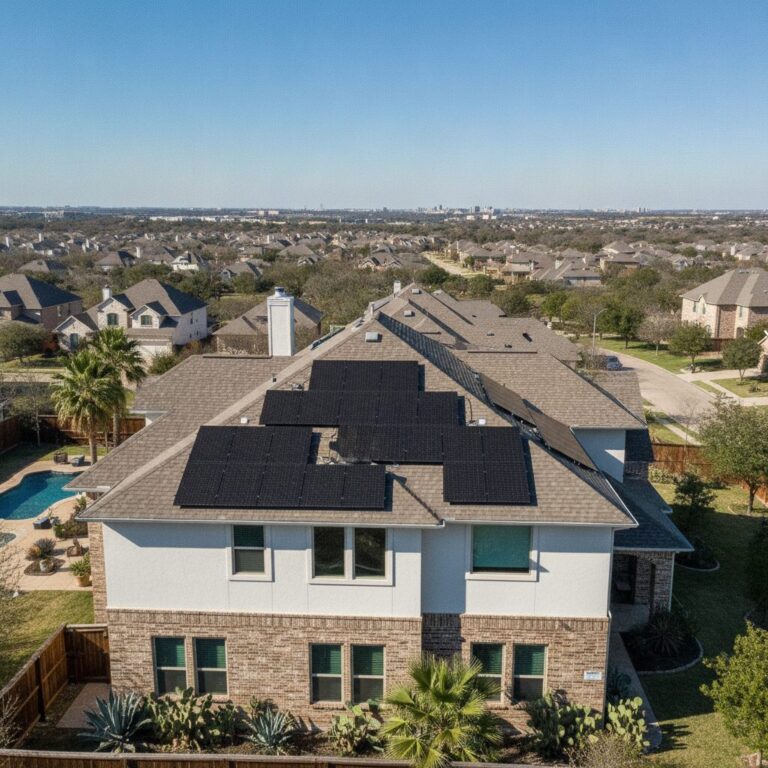
Standing-seam metal has gone from rural-barn aesthetic to a default upgrade in newer East Austin and Hill Country builds. At $1,000–$1,750 per square, it’s roughly 2.5x the cost of architectural shingle, but it lasts twice as long and reflects heat well enough to drop attic temps 15–25°F in July. That shows up on your CPS Energy or Austin Energy bill, though the payback is slow — usually $150–$400 per year in cooling savings.
Two things to verify before signing a metal contract: the gauge (24-gauge is the standard; 26-gauge is thinner and dents in hail) and the clip system (concealed-fastener standing seam, not exposed-screw R-panel, unless you’re roofing a barn).
Tile
Concrete and clay tile show up on a sliver of Austin homes — Spanish-revival in Hyde Park, some Tarrytown estates, and newer Mediterranean builds west of Mopac. If your house already has tile, replacement is mostly about underlayment. The tiles themselves often outlive the felt or synthetic beneath them, so a “tile reset” — pulling tiles, replacing underlayment, reusing 85%+ of the original tile — runs $750–$1,200 per square. That’s a major savings versus a full new-tile install.
Hail, insurance, and the claim math
Austin sits on the southern edge of hail alley. The March 2021, April 2022, and May 2024 storms collectively put more than $3 billion in hail claims on Central Texas roofs. If you’ve owned your home for five years and haven’t filed a hail claim, your roof has probably taken at least one qualifying hit.
Here’s how the claim flow actually works:
- Inspection. A reputable roofer (not a door-knocker who showed up the day after a storm) does a free assessment. They chalk-mark hail bruises on shingles, gutters, vents, and AC fins. Eight to ten hits per test square is the typical threshold for a totaled roof.
- Claim filed. You — not the contractor — file with your carrier. Texas Insurance Code §1811 makes it illegal for a roofer to waive or rebate your deductible, despite what yard signs promise.
- Adjuster meeting. Your contractor should be on the roof with the adjuster. This is where claims get won or lost. Missed slopes, undercounted squares, and excluded code upgrades are common.
- ACV vs. RCV payout. Most policies pay Actual Cash Value first (depreciated), then release the recoverable depreciation once work is complete and invoiced.
Your out-of-pocket on a hail claim is the deductible, period. On a $400,000 Austin home, wind/hail deductibles are commonly 1–2% of dwelling coverage — so $4,000 to $8,000. If a roofer offers to “eat your deductible,” they’re either committing insurance fraud or padding the invoice to your carrier to cover it. Both will burn you on the next claim.
One detail people miss: Texas allows a separate wind/hail deductible. Check your declarations page. A homeowner with a 1% all-perils deductible may have a 2% wind/hail deductible buried on page two.
When partial repair beats full replacement
Contractors make more money on full replacements, so the bias is real. Here’s when a repair genuinely is the smarter move:
- Localized wind damage. A few dozen blown shingles on the windward slope after a thunderstorm. If the rest of the roof has 10+ years of life left and the shingles are still available in the same color batch, a $600–$1,800 repair beats a $12,000 replacement.
- Single-slope hail damage. Sometimes one side of the house catches a hailstorm at an angle that totals it while the leeward slope is untouched. Texas insurance law (since the 2017 changes around “matching”) is fuzzy here. If your carrier won’t pay for matching, replacing one slope at $3,000–$5,000 may make sense.
- Flashing-only leaks. Most “roof leaks” aren’t shingle failures. They’re chimney flashing, plumbing boots cracked by UV, or skylight curbs. A roofer who recommends a full replacement for a single boot leak is selling you something. Boot replacement is $150–$350.
- Roofs under 8 years old. Manufacturer defects (a bad batch of shingles, granule loss) get warranty-covered. Don’t replace it on insurance — file a manufacturer claim through your installer.
The flip side: if your roof is 18+ years old and you’re patching a third leak in two years, you’re throwing money away. At that point a full replacement preserves the decking before it rots and lets you reset your insurance relationship cleanly.
Getting accurate Austin quotes without the runaround
Three quotes is the minimum. Five is better. Skip anyone who knocks on your door after a storm with out-of-state plates — Texas saw a wave of storm-chaser fraud after the 2022 hail season, and the AG’s office has prosecuted several. Use the Roofing Contractors Association of Texas directory as a baseline, then cross-check Google reviews older than the most recent storm.
What to ask every contractor:
- Are you the actual installer, or are you subcontracting the crew? (Sub crews aren’t automatically bad, but you want to know.)
- What’s your decking allowance? Replacing rotted OSB at $75/sheet versus $140/sheet is a real number.
- Are you pulling a permit? In the City of Austin, reroofs require one. In unincorporated Travis County, they don’t.
- What’s the workmanship warranty, and is it transferable if I sell? Five years is standard; ten is a real benefit.
- Do you offer the Class 4 impact-resistant upgrade, and will you provide the manufacturer cert letter for my insurer?
If you’re already managing the project — staging quotes, tracking the warranty paperwork, coordinating with adjusters — drop the documentation into a single place rather than letting it scatter across email and texts. HomeShow.ai’s HomeVault is built for exactly this: roof material, install date, warranty PDFs, photos of the decking before the underlayment went down. The day you sell or file the next claim, the file is already organized.
A realistic budget for the typical Austin homeowner
For a 25-square, single-story, 6:12-pitch home in a mid-tier neighborhood (think Crestview, Allandale, southern Round Rock), plan for these out-of-pocket scenarios:
- Out-of-pocket replacement, architectural shingle: $11,000–$14,500
- Out-of-pocket replacement, Class 4 shingle: $13,500–$18,000
- Insurance claim, architectural shingle, 1.5% deductible on $400K dwelling: ~$6,000 out of pocket
- Out-of-pocket standing-seam metal: $28,000–$40,000
- Tile reset (existing tile reused): $18,000–$28,000
Build a 10% contingency into whatever number you land on. Decking surprises are the most common overrun, and you’d rather have the buffer than scramble mid-project.