Move Out Cleaning Checklist Texas: What Landlords Actually Inspect
If you want your full deposit back in Texas, your move out cleaning checklist needs to cover six specific zones landlords almost always inspect: the oven interior, the refrigerator (including the drip pan), bathroom grout and caulk lines, baseboards, blind slats, and the inside tracks of every window and sliding door. Texas Property Code §92.104 lets landlords deduct for damages “beyond normal wear and tear,” and cleaning failures are the easiest, fastest deduction a property manager can justify. A professional move-out clean in Austin runs $180–$420 for a typical 2-bedroom. A withheld deposit averages $600. The math is usually obvious.
This guide walks through what Texas landlords actually look at during the final walkthrough, what a pro cleaner will (and won’t) handle, and how to time the booking so you’re not scrubbing baseboards at 11 p.m. the night before turnover.
What Texas Law Says About Cleaning and Deposits
Texas Property Code §92.104 governs deposit deductions. The relevant phrase is “damages and charges for which the tenant is legally liable under the lease or as a result of breaching the lease.” Cleaning is not damage, but most Texas leases explicitly require the unit to be returned in the same condition as move-in, “reasonable wear and tear excepted.”
That qualifier does heavy lifting. Faded carpet from sunlight: wear. Cat urine in the carpet pad: damage. Light scuffs on a wall: wear. A greasy stovetop and a refrigerator with old produce: a cleaning charge, fully deductible.
Landlords in Texas have 30 days from the day you surrender the unit and provide a forwarding address to return the deposit or send an itemized list of deductions. If they miss that window in bad faith, §92.109 allows you to recover three times the wrongfully withheld amount plus $100 and attorney’s fees. Worth knowing, but not worth banking on — the easier path is leaving the unit clean enough that nothing gets withheld in the first place.
The Six Areas Landlords Always Inspect
After talking to property managers across Austin, Round Rock, and the DFW metroplex, the same six zones come up every time. These are the line items that turn into deductions on the itemized statement.
1. The Oven Interior
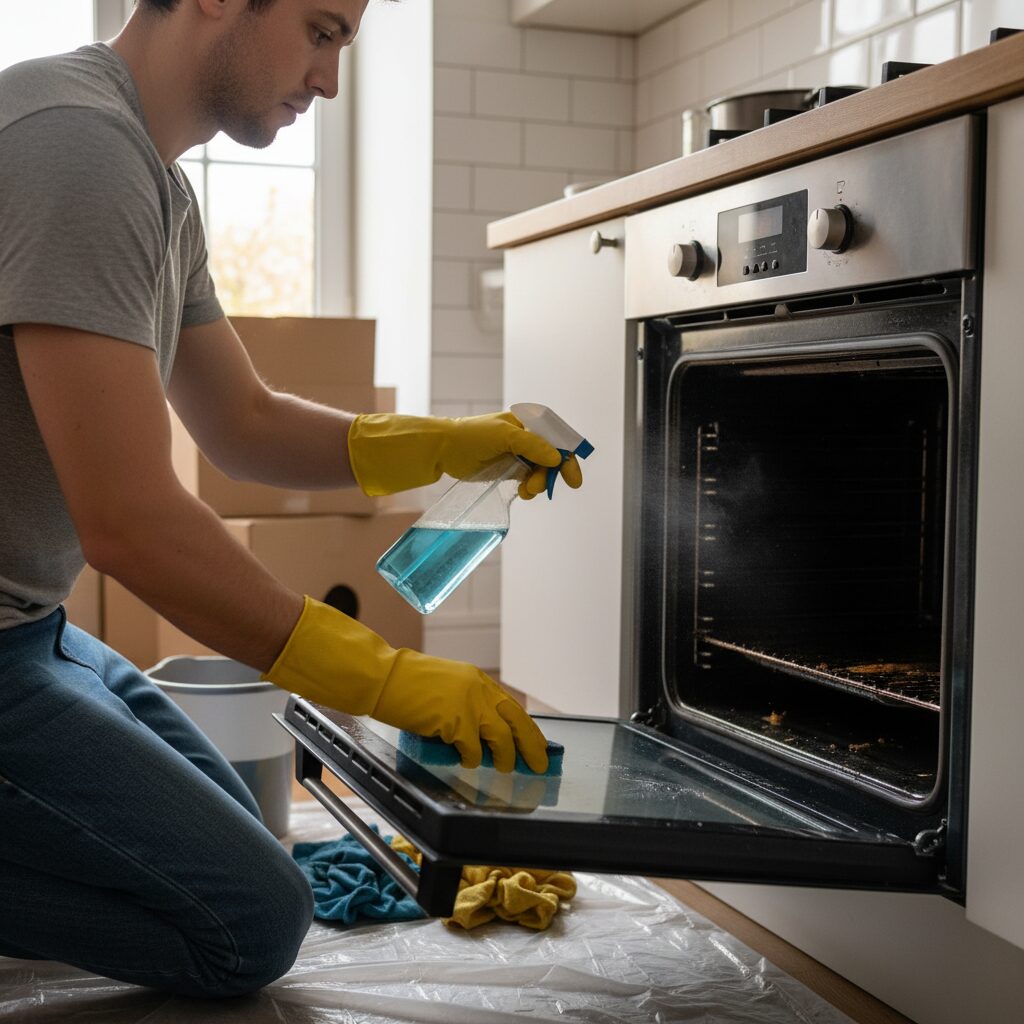
This is the single most common deduction. Property managers will open the oven door during the walkthrough. They are looking at the back wall, the heating element area, and the bottom panel. Baked-on grease counts as a cleaning charge, typically $40–$75 itemized.
A self-clean cycle started 4 hours before you hand over the keys is the cheapest fix. If your oven doesn’t have one, a single application of Easy-Off Fume Free overnight handles 90% of what an inspector cares about.
2. The Refrigerator (Inside, Behind, and Underneath)
Empty, wiped, defrosted if applicable, and pulled out. Texas leases almost universally require the fridge to be left running unless specified otherwise — turning it off and closing the door causes mold, which is a damage charge, not a cleaning one. Inspectors check the gasket seal, the produce drawers, the drip pan underneath, and the coils behind.
3. Bathroom Grout, Caulk, and Exhaust Fans
Pink or black mildew along the tub caulk line is the giveaway that a unit wasn’t deep-cleaned. So is a dusty exhaust fan cover. Property managers in humid markets like Houston and Austin treat bathroom mildew as a near-automatic deduction because re-caulking runs them $150 minimum.
4. Baseboards and Door Frames
Run your finger along the top edge of a baseboard. If it comes back gray, the inspector’s will too. This is the detail that separates a “good enough” clean from one that earns the full deposit back. Doorframes — especially the top edge — collect the same dust.
5. Blind Slats and Window Tracks
Horizontal blinds in Texas rentals accumulate a remarkable amount of dust, particularly in units with central AC vents nearby. Inspectors will run a hand along a slat or two. Window tracks, especially on sliding patio doors, collect dead insects and grit that takes a vacuum brush attachment plus a damp cotton swab to clear.
6. Walls, Scuffs, and Nail Holes
Small nail holes from picture hangers are generally considered wear and tear in Texas. Anchors, large screw holes, and any hole bigger than a pencil eraser are not. Patch with lightweight spackle, sand flush, and touch up with matching paint if you have it. Scuff marks on light walls come off with a Mr. Clean Magic Eraser used gently — press too hard and you’ll remove paint, which creates a worse problem.
The Full Move Out Cleaning Checklist for Texas Rentals
Print this. Tape it to the fridge the week before turnover. Work top-down, room by room.
Kitchen
- Oven interior, racks, and door glass (inside and out)
- Stovetop, drip pans, and the gap between stove and counter
- Range hood filter (run it through the dishwasher)
- Microwave interior, including the turntable underside
- Refrigerator interior, drawers, gasket, and drip pan; pull it out and sweep underneath
- Dishwasher interior, filter, and rubber seal
- All cabinet interiors, shelves, and drawer tracks
- Cabinet exteriors, especially handles and the area above the stove
- Sink, faucet, and the caulk line where the sink meets the counter
- Counters, backsplash, and outlet covers
Bathrooms
- Toilet (bowl, base, behind the tank, and the floor bolts)
- Tub or shower, including grout and caulk
- Shower door tracks and glass
- Sink, faucet, and counter
- Mirror and medicine cabinet interior
- Exhaust fan cover (pops off, rinses, replaces)
- Baseboards and floor behind the toilet
Living Areas and Bedrooms
- Ceiling fan blades (top side, where dust collects)
- Light fixtures and bulb covers
- Air vent covers and visible return filter
- Blinds, slat by slat
- Window interiors and tracks
- Baseboards, door frames, and door tops
- Closet shelves and rods
- Outlet and switch plates
- Floors: vacuum carpet thoroughly, mop hard surfaces
Exterior and Common Items
- Patio or balcony swept
- Front door, including the threshold and any glass
- Replace HVAC filter (a $15 item that landlords always notice)
- Replace any burnt-out bulbs with matching wattage
- Empty and clean dryer lint trap
What Hiring a Pro Costs in Texas
Move-out cleaning is priced separately from standard housekeeping because it includes interior cabinets, oven, and fridge. Here’s what booking platforms and independent cleaners are quoting in Texas markets right now.
| Unit Size | Austin / Round Rock | DFW | Houston | San Antonio |
|---|---|---|---|---|
| Studio / 1BR | $150–$220 | $140–$200 | $135–$195 | $130–$185 |
| 2BR / 2BA | $220–$340 | $200–$310 | $195–$300 | $180–$280 |
| 3BR / 2BA | $300–$450 | $280–$420 | $270–$410 | $250–$380 |
| 4BR house | $420–$650 | $380–$600 | $370–$580 | $340–$540 |
Add-ons that aren’t always included: interior window cleaning ($60–$120), carpet shampoo ($35–$60 per room), wall washing ($75–$150), and garage sweep-out ($40–$80). If you have pets, expect a $30–$75 surcharge.
One quiet truth: many Texas leases require professional carpet cleaning with a receipt. Read your lease. If yours does, an at-home Bissell rental won’t satisfy it, and the landlord can hire someone and deduct the cost — usually at a markup.
How to Book the Right Cleaner Without Getting Burned
The cheapest Craigslist quote is rarely the right answer for a move-out. You want someone insured, with reviews specifically mentioning move-outs (not just recurring housekeeping), and a written checklist that matches what your landlord will inspect.
When you book through a platform like HomeShow.ai, three things matter more than price:
- Insurance and bonding. If a cleaner damages a countertop or breaks a blind, you don’t want that coming out of your deposit.
- A written move-out scope. Ask for the checklist before booking. If “inside oven” and “inside fridge” aren’t on it, keep looking.
- A re-clean guarantee. Reputable cleaners will come back within 24–48 hours if the landlord flags something. This single feature has saved more deposits than any other.
Schedule the clean for the day after you move furniture out and the day before the walkthrough. Cleaning around boxes is a waste of money, and cleaning two days before turnover gives dust enough time to resettle on baseboards and blinds.
Timing the Walkthrough to Your Advantage
Texas law doesn’t require landlords to do a joint walkthrough with you, but most will if you ask. Request one in writing 7–10 days before move-out. Be there with your phone. Take time-stamped video of every room after the cleaners leave and before you hand over the keys — this is the single best protection against a disputed deduction.
If the landlord points out something during the walkthrough, you have leverage to fix it on the spot or call your cleaner back under the re-clean guarantee. If you skip the walkthrough, the first time you hear about a $200 oven cleaning charge is on the itemized statement, and by then the dispute path is small claims court.
When a DIY Clean Makes Sense
If you’re in a studio, you’ve lived there under a year, and you’re naturally a careful tenant, a thorough DIY clean over a weekend is realistic. Budget 8–12 hours, $40 in supplies (degreaser, Magic Erasers, microfiber cloths, a good mop), and accept that the oven and the blinds will eat most of that time.
If you’re in a 3-bedroom house, you’ve been there 3+ years, you have pets, or your lease specifies professional cleaning, hire it out. The math almost always favors the pro: $350 spent reliably beats $600 withheld unpredictably, and your last 48 hours in a place should not be spent on your hands and knees with a toothbrush in the shower grout.
A Quick Note on Disputes
If your landlord withholds part of your deposit for cleaning you believe was done correctly, send a written dispute letter within 30 days of receiving the itemized statement. Include your move-out video, the cleaner’s invoice, and a request for a specific dollar refund. Most disputes settle at this stage because landlords don’t want to defend a §92.109 claim in justice court, where filing fees are under $100 and you can represent yourself.