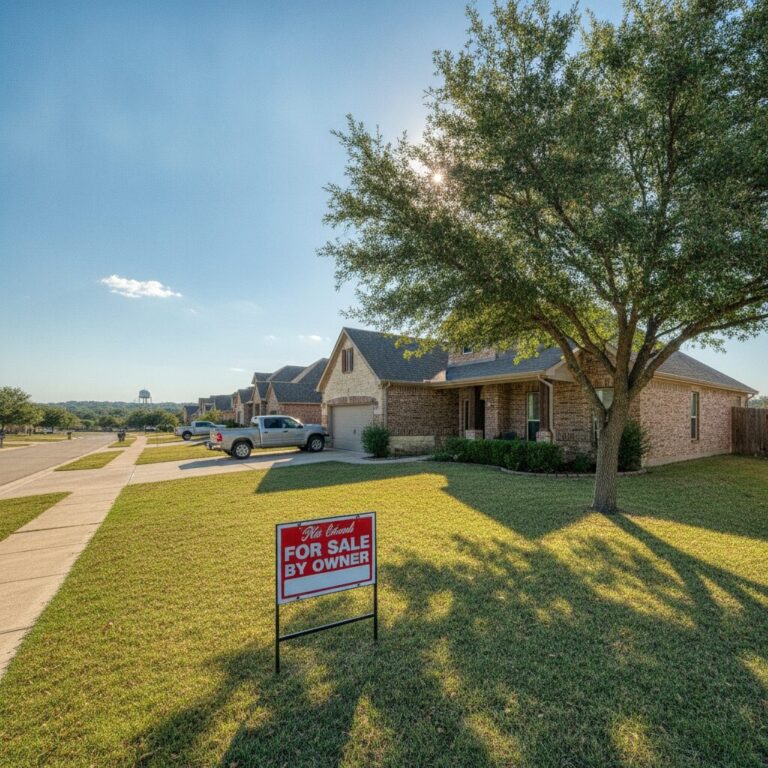
Austin Home Sellers Are Leaving Real Money on the Table — Usually Before They Ever Pick an Agent
Most Austin home sellers lose their biggest money before the sign ever goes in the yard. Not in the negotiation. Not at closing. In the first 48 hours after deciding to sell — when they pick an agent the old way, accept the highest suggested list price, and skip the prep work that actually moves buyers. On a median Austin home, that quiet stack of mistakes can easily total $20,000 to $40,000. The fix is not finding a cheaper agent. The fix is making agents compete on a real plan before anyone signs a listing agreement.
Selling a home in Austin used to feel easy. List it. Get showings. Wait for multiple offers. Pick the cleanest one. Move on.
That was the old Austin market. Today’s is different.
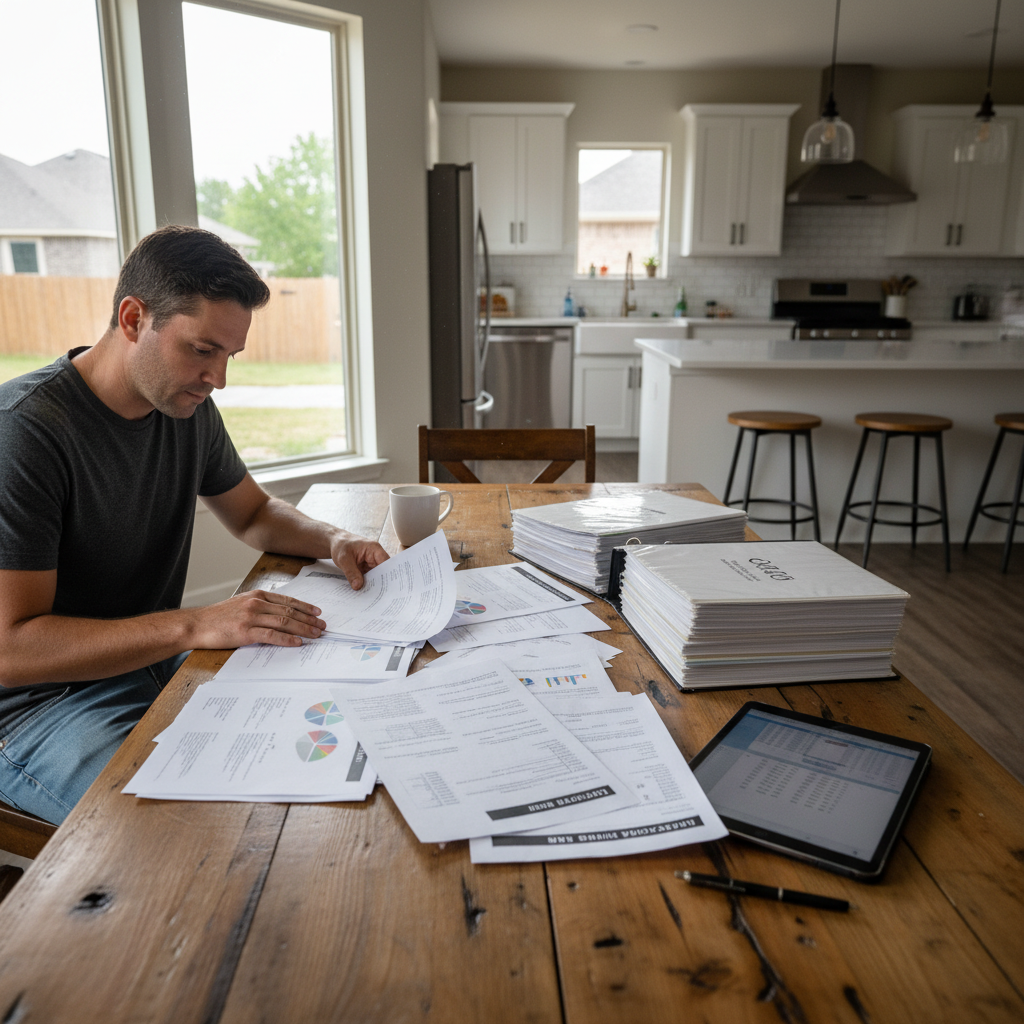
The New Austin Seller Math
Let’s use a typical City of Austin home as the baseline.
In April 2026, the median residential sale price in the City of Austin was about $573,750, according to the Unlock MLS Central Texas Housing Report. At Austin’s estimated average total real estate commission of 5.88% (per Clever’s 2026 Austin commission survey), that’s roughly $33,700 in agent commissions on a single median-priced sale.
That single line item is one of the largest expenses in the entire transaction. Bigger than title fees. Bigger than most repair credits. Bigger, often, than the seller’s moving and bridge costs combined.
Then add the market reality. Austin’s average close-to-list price has been hovering around 94.9%, meaning the typical seller is accepting a meaningful discount from asking. Days on market have stretched. Inventory is up. Buyers have more choices and they know it.
For a typical Austin seller, money leaks from several places at once:
- Overpaying for representation without comparing agent proposals
- Choosing the wrong pricing strategy
- Underinvesting in presentation, staging, repairs, or marketing
- Accepting weak negotiation terms
- Offering unnecessary concessions
- Failing to compare expected net proceeds before signing
Individually, each looks small. Together, they routinely cost sellers more than a year of mortgage payments.
Mistake #1: Hiring an Agent Without Making Agents Compete
Most sellers compare personalities. They should be comparing business plans.
A serious listing proposal should answer specific questions, in writing:
- What is your pricing strategy, and what comparable sales actually support that price?
- What improvements should we make before listing — and what should we not waste money on?
- What is your marketing plan beyond putting it on the MLS?
- What commission are you charging, and what buyer-agent compensation do you recommend post-NAR settlement?
- What is your expected net proceeds estimate?
- What happens if the home does not move in the first 14, 30, or 45 days?
If an agent cannot show you, on paper, how they plan to protect your net proceeds, you are not interviewing an agent. You are guessing. Guessing is expensive.
On a $573,750 Austin home, saving just 1% on total transaction cost is worth about $5,700. Negotiating the listing side from roughly 2.9% to 2.0% saves more than $5,000. Pulling total commission exposure from 5.88% down to 4.5% saves nearly $8,000.
This is not an argument for the cheapest agent. The cheapest agent is rarely the best agent. It is an argument that the fee should be justified by a clear plan, real data, and a credible strategy to grow your net.
Mistake #2: Confusing the Highest Suggested List Price With the Best Strategy
Some agents win listings by telling sellers what they want to hear.
That is dangerous in a softer market. Overpricing quietly destroys leverage. The home sits. Showings slow down. Buyers’ agents start asking, “What’s wrong with it?” By the time the seller cuts price, they are negotiating from weakness instead of strength.
A price reduction is not always a failure. Sometimes it is the right move. But avoidable reductions are expensive.
Run the math on the $573,750 median:
| Avoidable price cut | Lost dollars |
|---|---|
| 2% | $11,475 |
| 3% | $17,213 |
| 5% | $28,688 |
| 7% | $40,163 |
The right agent does not just say, “I think we can get this price.” They show the comps, describe the buyer pool, identify the immediate competition on the MLS, and recommend a pricing band designed to maximize net — not flatter the seller into signing.
Mistake #3: Skipping the Pre-Listing Work That Actually Moves Buyers
Austin buyers are more selective than they were during the 2021 frenzy. They notice bad photos. They notice clutter. They notice deferred maintenance, dated paint, weak curb appeal, and awkward furniture layouts. Most of all, they notice when a home looks like it was rushed onto the market.
Presentation matters because buyers do not buy spreadsheets. They buy confidence.
NAR’s 2025 staging report found that a meaningful share of buyer’s agents said staging increased the offer price their clients were willing to make, and that staged homes spent less time on market. The highest-leverage rooms: living room, primary bedroom, kitchen, dining area, and the front exterior.
On a $573,750 home, even a 1% lift in perceived value is worth about $5,700. A 3% lift is more than $17,000. That does not mean every seller should sink $30,000 into renovations. It means every seller should have a pre-listing plan with a real ROI estimate behind each line item.
The right question is not, “Should I fix everything?” It is: Which improvements are most likely to increase buyer confidence, reduce objections, and improve my final net?
Mistake #4: Looking at Sale Price Instead of Net Proceeds
A seller can accept the highest offer and still choose the worse deal. The real number is never the headline price. The real number is net proceeds after:
- Agent commissions
- Buyer-agent compensation or concessions
- Seller closing costs
- Negotiated repairs
- Home warranty requests
- Rate buydowns
- Appraisal and financing risk
- Timeline risk
- Post-closing occupancy terms
An offer that comes in $10,000 above the next-best may quietly net less once you account for $7,500 in closing-cost concessions, a $4,000 repair credit, and a 45-day close with a leaseback. The lower offer with a 21-day cash close and no concessions often wins on the only line that matters: the wire amount.
This is where a strong agent earns the fee. They should put two or three competing offers side by side and show the seller the actual money — not just the top-line bid.
Mistake #5: Paying Premium Fees for Commodity Service
There are excellent agents in Austin. There are also agents who put the home on MLS, upload phone photos, wait for the Zillow lead, and hope the market does the work.
The strange part is that many sellers pay similar commission structures for very different levels of service. Before signing, a seller should know exactly what is included:
- Pricing analysis with live comps
- Professional photography and video
- Listing copywriting
- Paid social and search marketing
- Open house and buyer-agent outreach strategy
- Pre-listing checklist and vendor coordination
- Staging recommendations
- Offer review and negotiation strategy
- Net proceeds modeling
- A defined plan if the listing stalls at day 14, 30, and 45
If the plan is generic, the fee should not be premium.
The Better Way: Make Agents Compete for the Listing
Austin sellers should not have to chase agents one by one, repeating the same property details on five separate calls. They should be able to build one clear seller profile and let qualified agents compete for the opportunity.
That is the idea behind ListMatch by HomeShow.ai. Instead of starting with one agent and one suggested list price, the seller starts with their own goals:
- Property details and condition
- Desired timeline
- Target sale price and net proceeds
- Known repairs or improvements
- Preferred commission structure
- Marketing expectations
- Special circumstances (tenant occupied, relocation, probate, etc.)
Agents then submit structured proposals against that brief. The seller can compare commission, marketing plan, pricing strategy, local experience, pre-listing recommendations, expected net proceeds, service level, timeline, and what actually differentiates one agent from the next — all in one view.
The power dynamic shifts. The seller stops asking, “Which agent do I like?” and starts asking, “Which agent has the best plan to maximize my outcome?” That is the question that protects net proceeds.
The Bottom Line for Austin Home Sellers
In today’s Austin market, the biggest mistake is assuming the market will protect you. It will not. The right agent, pricing strategy, prep plan, and negotiation structure can move the final wire amount by tens of thousands of dollars. The wrong strategy quietly costs the same amount in the other direction.
Before you sign a listing agreement, make agents show you the math. Not just the suggested list price. Not just the commission percentage. Not just the listing pitch. The full plan.
In Austin’s current market, the money is not only made when the offer comes in. It is made before the home ever hits the MLS.
Sources: Unlock MLS April 2026 Central Texas Housing Report (Austin median sale price, inventory, close-to-list ratio); Redfin and Zillow market data (sale-to-list pressure and days-to-sale); Clever 2026 Austin commission survey; NAR settlement materials on broker compensation negotiability; NAR 2025 Profile of Home Staging.